"Don't Look Back in Anger - Cover version. Beatles [AI] style ft George Harrison [AI] style"
142,546 回視聴 2023/05/04
This is just fan fiction.
From the creators:
'Having heard a reimagned beatles version of shes electric and some might say we were told that you would love to hear a beatles take on dont look back in anger. You asked, we delivered.
All human performances. We got our rickenbackers out and ran an Abbey Road esque signal chain (TG12345) in plug in form. We love the result. We love George. xx from Vintage Vibes AIさんのyoutubeチャンネル。
"John Lennon - Don't Look Back in Anger (Oasis AI Cover)"
48,676 回視聴 2023/05/07
Achei a voz do John Lennon super combinaria com essa música :) from NOCT!さんのyoutubeチャンネル。
"Paul McCartney - Champagne Supernova Ft Kurt Cobain (Oasis) (AI Cover)"
"Hello (Cover Version of the Oasis Track) in The Beatles [AI] Style"
5,581 回視聴 2023/05/29
This is our big middle finger to those who said our Some Might Say wasn't 'beatlsy' enough. We got a fairchild compressed Steinway, a Mellotron, the Baldwin Electronic Harpsichord from Because. a ludwig drum kit mic'd up with an AKGD19 and 20 hard-panned. And the best replication of the vocal talents of Dr Winston O' Boogie on you tube. What more do you want? from Vintage Vibes AIさんのyoutubeチャンネル。
"Space Oddity - The Beatles (AI Cover)"
22,303 回視聴 2023/05/15
I do not own the rights to this song.
John Lennon and Paul McCartney collaborate once again to bring you a cover of the classic hit by Bowie. Enjoy!
David Bowie redefined musical genres and the potential of live performance for generations of music lovers. Creating and discarding a variety of personae and restlessly challenging musical boundaries, Bowie released timeless albums including Space Oddity, Hunky Dory, The Rise and Fall of Ziggy Stardust…, Aladdin Sane, Diamond Dogs, Young Americans, Station to Station, "Heroes,” Let's Dance, Heathen, The Next Day and many more. Blackstar, Bowie’s 28th and final studio album, was released on his 69th birthday, January 8, 2016. David Bowie died on January 10, 2016, two days after the release of Blackstar. His body of work, his influence on the worlds of music, art, fashion, film, theatre and beyond, and his legacy of innovation and reinvention will live forever. 2022 kicks off with Bowie at 75, a celebration of his 75th birthday with the Brilliant Adventure box set, the previously unreleased Toy, the 50th anniversary of Ziggy Stardust and a series of special events.
"David Bowie - Space Oddity"
2,354,310 回視聴 2019/03/10
Official video for Space Oddity by David Bowie.
On 2 February 1969, David Bowie went in to Willesden’s Morgan Studios to cut a new song, ‘Space Oddity’, with colleague John ‘Hutch’ Hutchinson (who sings the ‘ground control’ sections) for ‘Love You Till Tuesday’, a film that was being made by Bowie’s then manager, Kenneth Pitt.
Bowie subsequently demoed further versions of the song in an attempt to secure a record deal, which led ultimately to a contract with Mercury/Philips and the world-famous hit version recorded on 20 June 1969. The February recording finally became part of Decca when Pitt sold the rights to Love You Till Tuesday to PolyGram in 1984. from David Bowie♪さんのyoutubeチャンネル。
그래 이렇게 윤 대통령씨, 이하의 일은 나의 독말입니다만, 실행한 것은 그 시점입니까?쿠즈는 모두 반드시 살처분한다. 2025060803:42(일본 시간). 2025060806:18(일본 시간).
で。2024121008:12(日本時間)。
I have a simple question for you、Part of the Swarm of Zombies.
I don't know if it was presidential authority or what、but after carrying out what was essentially white terror、didn't you、to put it mildly、first arrest the targeted group?
Or was it turned down by the execution team?
Or is this just business as usual、a stupid made-up story?2024120905:36(japan time)。
하나、좀비 무리 중 하나에게 소박한 질문이지만.
대통령 권한인가 뭔지는 나는 모르지만、사실상의 백색 테러를 실행해 두고、마일드한 표현으로、그 표적 그룹의 신체의 구속이라든지 맨 먼저 하지 않았던 거야?
아니면 실행 부대에 거절당했어?
아니면 보통 영업의 머리가 너무 나쁜 제작 이야기인가?2024120905:47(일본 시간).
◆たか‐しお【高潮】‥シホ台風や低気圧によって、海水面が異常に高まり、海水が陸上に侵入すること。気象災害の一つ。暴風津波。秋大潮。日葡辞書「タカシヲガサス」◆たかしお【高潮】a storm surge; an exceptionally high tide¶台風で高潮が岸壁を越えた.A typhoon sent a storm surge over the quay walls.◆たかしお【高潮】台風などで海面が異常に高くなって陸におしよせる現象。風つなみ。storm surge候補の11番目、だがしかし〈only〉リーダーズ英和辞典第2番中の例文。
So、although Yumeno Kyusaku-san's novel is very interesting even if you read (or listen) it as it is、this "love after death" is especially important to my argument in the flow of this episode、so I would like to mention it. But it's Japanese only (lol). 2024122317:12 (Japan time).
The website ‘Films of the Great Kanto Earthquake of 1923’, launched by the National Film Archive of Japan and the National Institute of Informatics in September 2021, has been updated with another film. The fifth edition of the site showcases the following title:
"Live Reports on the Great Earthquake and Its Damage in Tokyo and the Kanto Region, September 1, 2 and 3, 1923" ("Tokyo Kanto chiho - Daishinsai sangai jikkyo - Taisho juninen kugatsu tsuitachi futsuka mikka", 1923)
Credits: Heihan News [production].
26 minutes, b/w, silent.
Courtesy: Tambasasayama City Audiovisual Library.
NFAJ plans to keep adding new titles to the site regularly, aiming to have more than 20 titles available by the centennial of the earthquake in 2023. Please visit the site at https://kantodaishinsai.filmarchives.jp and use it as a depository of facts and memories of the historic disaster.
"【全篇】『日本之大地震』1923年|「関東大震災映像デジタルアーカイブ」より‘Films of the Great Kanto Earthquake of 1923’"
The website ‘Films of the Great Kanto Earthquake of 1923,’ launched by the National Film Archive of Japan and the National Institute of Informatics in September 2021, has been updated with the following title:
“The Great Earthquake of Japan” (“Nihon no daijisin”, 1923)
With a total of 20 titles of the quake-related films which are now available on the internet, NFAJ completed the site on September 1, 2023: on the same date a hundred years before the devastating earthquake occurred.
The website ‘Films of the Great Kanto Earthquake of 1923’, launched by the National Film Archive of Japan and the National Institute of Informatics in September 2021, has been updated with another film.
"Symphony of the Reborn Imperial Capital" ("Fukko teito sinfoni", 1929)
Produced by the Tokyo Institute for Municipal Research.
Courtesy: The Tokyo Institute for Municipal Research.
◆Miles in the Sky is a studio album by American trumpeter and composer Miles Davis, released on July 22, 1968, by Columbia Records. It was the last full album recorded by Davis' "Second Great Quintet" and marked the beginning of his foray into jazz fusion, with Herbie Hancock playing electric piano and Ron Carter playing electric bass guitar on opening track “Stuff”. Additionally, electric guitarist George Benson features on “Paraphernalia”.
Background
Miles in the Sky was produced by Teo Macero and recorded at Columbia Studio B in New York City on January 16, 1968, and May 15–17, 1968. The album's title was a nod to the Beatles' 1967 song "Lucy in the Sky with Diamonds". This is the final appearance of tenor saxophonist Wayne Shorter, pianist Herbie Hancock, bassist Ron Carter and drummer Tony Williams together on a full-length studio album in Davis’ discography.
Composition
For Miles in the Sky, Davis and his quintet pulled further away from conventional jazz and more toward jazz-rock fusion. The album's compositions are extended and groove-oriented, often with rhythms that, according to Stephen Thomas Erlewine, "are straightforward, picking up on the direct 4/4 beats of rock, and these are illuminated by Herbie Hancock's electric piano". In the opinion of All About Jazz's C. Michael Bailey, Miles in the Sky was one of six albums by Davis' quintet between 1965 and 1968 that introduced the poorly-defined jazz subgenre post-bop.
Critical reception
In a contemporary review, Down Beat magazine called Miles in the Sky one of the best albums by Davis and his second quintet because of how it shows he had been influenced by Ornette Coleman and John Coltrane: "even as Miles denies it, for their assault on the popular song has pushed Miles along the only path that seems open to him, an increasingly ironic detachment from sentiment and prettiness".
In a retrospective review for AllMusic, Erlewine found it less adventurous than Nefertiti (1968): "Intriguing, successful jams in many respects, but ... this is less visionary than its predecessor and feels like a transitional album – and, like many transitional albums, it's intriguing and frustrating in equal measures." Hernan M. Campbell of Sputnikmusic was more enthusiastic and praised the musicianship throughout, particularly that of Williams, whose drumming he found "mind-blowing". Campbell felt that Miles in the Sky should not be overlooked because it marked the beginning of Davis' electric period and was one of the defining jazz fusion albums.
Track listing
Columbia – CS 9628
Side one (No./Title/Writer(s)/Recording session/Length)
1. "Stuff" Miles Davis May 17, 1968 17:00
2. "Paraphernalia" Wayne Shorter January 16, 1968 12:38
Side two (No./Title/Writer(s)/Recording session/Length)
3. "Black Comedy" Tony Williams May 16, 1968 7:26
4. "Country Son" Miles Davis May 15, 1968 13:52
Total length: 50:56
CD Reissue (Columbia – CK 65684) (No./Title/Writer(s)/Recording session/Length)
5. "Black Comedy" (Alternate Take) Tony Williams May 16, 1968 6:23
6. "Country Son" (Alternate Take) Miles Davis May 15, 1968 14:38
Total length: 1:11:57
Personnel
・Miles Davis – trumpet, cornet on "Stuff" and "Country Son"
・Wayne Shorter – tenor saxophone
・Herbie Hancock – piano, electric piano on "Stuff"
・Ron Carter – bass, electric bass on "Stuff"
・Tony Williams – drums
・George Benson – electric guitar on "Paraphernalia" from wiki.
and
"01 Frelon brun"
"02 Tout de suite"
"03 Petits Machins (Little Stuff)"
"04 Filles de Kilimanjaro"
"05 Mademoiselle Mabry (Miss Mabry)"
"06 Tout de suite (alternate take)"
◆Filles de Kilimanjaro (French for Girls of Kilimanjaro) is a studio album by American jazz trumpeter Miles Davis. It was recorded in June and September 1968, and released on Columbia Records. It was released in the United Kingdom by the company's subsidiary Columbia (CBS) in 1968 and in the United States during February 1969. The album is a transitional work for Davis, who was shifting stylistically from acoustic recordings with his "second great quintet" to his electric period. Filles de Kilimanjaro was well received by contemporary music critics, who viewed it as a significant release in modern jazz. Pianist Chick Corea and bassist Dave Holland appear together on two tracks, their first participation on a Davis album.
Background
The June sessions featured Wayne Shorter on tenor saxophone, Herbie Hancock on the electric Rhodes piano, Ron Carter on electric bass guitar, and Tony Williams on drums. The September sessions replaced Hancock with Corea, and Carter with Holland, making Filles de Kilimanjaro the last Miles album to feature his “Second Great Quintet”, although all except Carter would play on his next album, In A Silent Way. During the September sessions, Holland played acoustic double bass and Corea played an RMI Electra-piano in addition to acoustic piano. These are Holland and Corea's first known recordings with Davis. The album was produced by Teo Macero and engineered by Frank Laico and Arthur Kendy. Shortly after the sessions for Filles de Kilimanjaro, Davis led further sessions in November 1968 with additional personnel including Joe Zawinul (organ) and Jack DeJohnette (drums); however, these recordings were scrapped for several years until being released on compilations throughout the 1970s and 1980s. All of these, plus the September recordings from Filles de Kilimanjaro, were eventually included on The Complete In a Silent Way Sessions box set in 2001.
The album title refers, in part, to Kilimanjaro African Coffee, a company in which Davis had made a financial investment. Davis decided to list all the song titles in French to give the album an exotic touch. Davis married Betty O. Mabry Davis in September 1968, and named "Mademoiselle Mabry (Miss Mabry)" for her. The song itself was recorded during the same month as Davis's wedding and Betty appears on the album cover.
Composition and performance
The album can be seen as a transitional work between Davis's mainly acoustic recordings with the Second Quintet and his later electric period (for example, Bitches Brew). It is suffused in the heady abstraction of the 1960s, but attentive to blues tonalities, electronic textures, and dancing rhythms of later jazz fusion. Davis apparently saw it as a transitional work for him, as the album was the first in what would become a series of his releases to bear the subtitle "Directions in music by Miles Davis". However, author Paul Tingen points out that while Carter and Hancock played electric instruments at the first recording session, the later session was a bit of a throwback, in which Holland played only acoustic bass and Corea played both acoustic and electric piano. Noted linguist and Miles Davis-biographer Jack Chambers later wrote that the band sought to expand beyond their usual minimal structure and find a common mood, wanting listeners to "discover the unity of the pieces instead of just locating it, as viewers must discover the unity in a painting with several simultaneous perspectives".
The melodic complexity of "Petits Machins (Little Stuff)" highlights Davis's interest in departing from post-bop structure towards the sounds and textures of his subsequent fusion work. Music writer Marcus Singletary commented on its complexity, "True to the general concept of Filles de Kilimanjaro, a mosaic of controlled chaos becomes the defining sound of 'Little Stuff'". On the recording, the quintet expresses an 11
4 meter with a repeating riff and chromatically ascending dominant harmonies in the recording first section. Section two moves to a contrasting 10-bar section in 4
4 meter, with the opening six bars relying on an F pedal point in the bass, above which occur shifting harmonies each measure. The static F pedal section yields to a syncopated progression with meters seven to eight and a change of bass in meters nine to 10, as the quintet makes an alteration to section two during the improvisations. Music theorist Keith Waters cites this as an example of "Davis's—by now—well-worn practice of metric deletion", in which throughout the trumpet solo, the quintet maintains a repeated nine-bar cycle, rather than the 10 bars of section two heard during the first section. The quintet omits bar 10 of section two during the solos and maintains the harmonic progression of bars 1 through 9. As in the first section, the syncopated progression occurs in bar 7, but Carter does not participate in playing the syncopation of meters seven to eight during the improvisations, while Hancock interprets this progression more freely. Singletary said of its musical significance:
The fact that these musicians mostly follow each other instinctively into such undefined territory is jolting. Absent of any form of actual standardization, these rare glimpses into the thought processes of geniuses validates their singular language as impossible to replicate in any way that would do this original recording justice. Though relatively brief, this track is the highlight of the album, and its significance to jazz remains tantamount. Through it, an apex of creativity in Miles's career was reached, and the track also shows why each musician here is considered an A-list innovator.
— Marcus Singletary
As with the album's title track, the quintet does not return to the first section and the recording concludes with a second Davis improvisation.
Gil Evans, with whom Davis had previously collaborated, helped compose, arrange, and produce the album, though he is not mentioned in the credits. Evans co-composed "Petits Machins", which he later recorded as "Eleven" with himself and Davis listed as co-composers. The song "Mademoiselle Mabry (Miss Mabry)", while credited to Davis, is actually Gil Evans' reworking of "The Wind Cries Mary" by Jimi Hendrix (Davis and Evans had met with Hendrix several times to exchange ideas). At the same time, some portions of the song resemble Mann, Weil, Leiber and Stoller's "On Broadway".
Critical reception
In a contemporary review, Rolling Stone claimed that "no amount of track-by-track description here can begin to convey the beauty and intensity. There are five songs, but really they fit together as five expressions of the same basic piece, one sustained work". Stanley Crouch, a staunch critic of Davis's use of electric instruments, described the album as "the trumpeter's last important jazz record". In a retrospective review of the album, Uncut called it "a masterpiece of tropical exoticism". Sputnikmusic staff writer Tyler Fisher commented that the rhythm section-players "sound entirely innovative and fresh" and "The whole band, in both quintets, has an extreme awareness about each other and knows exactly where each soloist is going". He attributed its "more avant-garde feel" to a "lack of form and the constant outlook of many measures ahead", while calling it "a full out enjoyable listen, showcasing enough variety and virtuosity to not make the 70-minute album a tiring listen". AllMusic editor Stephen Thomas Erlewine called its music "unpretentiously adventurous, grounded in driving, mildly funky rhythms and bluesy growls from Miles, graced with weird, colorful flourishes from the band [...] Where Miles in the Sky meandered a bit, this is considerably more focused", dubbing it as "the swan song for his second classic quintet, arguably the finest collective of musicians he ever worked with". Erlewine also cited the album as "the beginning of a new phase for Miles, the place that he begins to dive headfirst into jazz-rock fusion", and commented on its significance in Davis's catalogue:
What makes this album so fascinating is that it's possible to hear the breaking point — though his quintet all followed him into fusion (three of his supporting players were on In a Silent Way), it's possible to hear them all break with the conventional notions of what constituted even adventurous jazz, turning into something new [...] [C]ertainly the music that would spring full bloom on In a Silent Way was still in the gestation phase, and despite the rock-blues-n-funk touches here, the music doesn't fly and search the way that Nefertiti did. But that's not a bad thing — this middle ground between the adventurous bop of the mid-'60s and the fusion of the late '60s is rewarding in its own right, since it's possible to hear great musicians find the foundation of a new form.
— Stephen Thomas Erlewine
DownBeat critic John Ephland called Filles de Kilimanjaro "the stylistic precursor to the ever-popular In a Silent Way of 1969", writing that "Filles is performed (and edited) like a suite, with a sense of flow unlike anything Davis had recorded up to that point. That flow is enhanced by a music played all in one key (F), with only five 'tunes,' and with a mood and rhythms that change gradually from start to finish". Ephland concluded in his review, "In passing, Filles de Kilimanjaro is a turning-point album unlike any other for Davis: For the first time, his bebop roots were essentially severed, rockier rhythms, electricity and ostinato-driven bass lines now holding sway". Jim Santella from All About Jazz wrote that the album's music "flows with a lyricism that remains highly regarded in today’s format", concluding in his review that "Filles De Kilimanjaro remains one of the classic albums from their collaboration, and represents a high point in modern jazz".
Track listing
All songs were credited to Miles Davis.
Side one (No./Title/Recording date and studio/Length)
1. "Frelon Brun" (Brown Hornet) September 24, 1968, Columbia 30th Street Studio 5:39
2. "Tout de Suite" (Right Away) June 20, 1968, Columbia 30th Street Studio 14:07
3. "Petits Machins" (Little Stuff) June 19, 1968, Columbia 30th Street Studio 8:07
Side two (No./Title/Recording date and studio/Length)
1. "Filles de Kilimanjaro" (Girls of Kilimanjaro) June 21, 1968, Columbia Studio B 12:03
2. "Mademoiselle Mabry" (Miss Mabry) September 24, 1968, Columbia 30th Street Studio 16:32
2002 reissue bonus track (No./Title/Recording date and studio/Length)
6. "Tout de suite" (alternate take) June 20, 1968, Columbia 30th Street Studio 14:36
Personnel
・Miles Davis – trumpet
・Wayne Shorter – tenor saxophone
・Herbie Hancock – electric piano on "Tout de Suite", "Petits Machins", and "Filles de Kilimanjaro"
・Chick Corea – piano, RMI electra-piano on "Frelon Brun" and "Mademoiselle Mabry"
・Ron Carter – electric bass on "Tout de Suite", "Petits Machins", and "Filles de Kilimanjaro"
・Dave Holland – double bass on "Frelon Brun" and "Mademoiselle Mabry"
◆ティトゥス・フラウィウス・ヨセフス(ラテン語: Titus Flavius Josephus、ヘブライ語: יוסף בן מתתיהו/ラテン文字表記: Yōsef ben Matiṯyāhu:ヨセフ・ベン・マタティアフ[注 1/ヨセフとはיהוה(ヤハウェ)が増し加える、マタティアとはיהוה(ヤハウェ)が賜わるという意味のヘブライ語。])、37年 - 100年頃)は、帝政ローマ期の政治家及び著述家。66年に勃発したユダヤ戦争で当初ユダヤ軍の指揮官として戦ったがローマ軍に投降し、ティトゥスの幕僚としてエルサレム陥落にいたる一部始終を目撃。後にこの顛末を記した『ユダヤ戦記』を著した。理想国家の形として神権政治を造語した。
amaterasu kingdom dimensionsⅣ‐3-8-1-◆『五分後の世界』(ごふんごのせかい)は、村上龍の小説。幻冬舎から1994年3月に刊行された。第二次世界大戦から現代に至るまで米軍を中心とする連合軍と戦争を継続している平行世界の日本を描くことで、現代日本に対する強烈なメッセージを秘めた作品である。村上龍はあとがきにおいて「最高のものになった」としているように、作者の代表的な「看板作品」である。作品中の日本国土の分割統治については、日本の分割統治計画をベースとしていると思われるが、中国とイギリスの支配計画地域が変更(イギリスが四国地方、中国が西九州)されている。あらすじ。箱根でジョギングをしていたはずの小田桐はふと気がつくと、どこだか解らない場所を集団で行進していた。そこは5分のずれで現れた「もう一つの日本」だった。「もう一つの日本」は地下に建設され、人口はたった26万人に激減していたが、第二次世界大戦終結後も民族の誇りを失わず、駐留している連合国軍を相手にゲリラ戦を繰り広げていた。from wiki.で、密出国さておき、言葉を知ってると聞き取れるはあるね(笑)。※今の日本国の首相は?2023012617:40(日本時間)。4:40"そんなことより、岸田総理"(笑)。2023080115:15(日本時間)。1月 15, 2024 amaterasu kingdom dimensionsⅢ‐5-4。1月 27, 2023 で。2023012617:21(日本時間)。 『オーガロイド』の格闘とはドッグファイトという認識でしょうか?5月 25, 2019 Tuesday, 2 July 2013 annual income From 1695 to the Meiji Restoration in 1868、nine "KOBAN" recasts were carried out. Most of them (seven times)、it was to reduce the content. As result、when the last recast in 1860、1 ryō became the weight of one-fifth on first. And gold content was als...




.png)

.png)

.png)

.png)
.png)




.png)
.png)


.png)
.png)
.png)

.png)
.png)
.png)


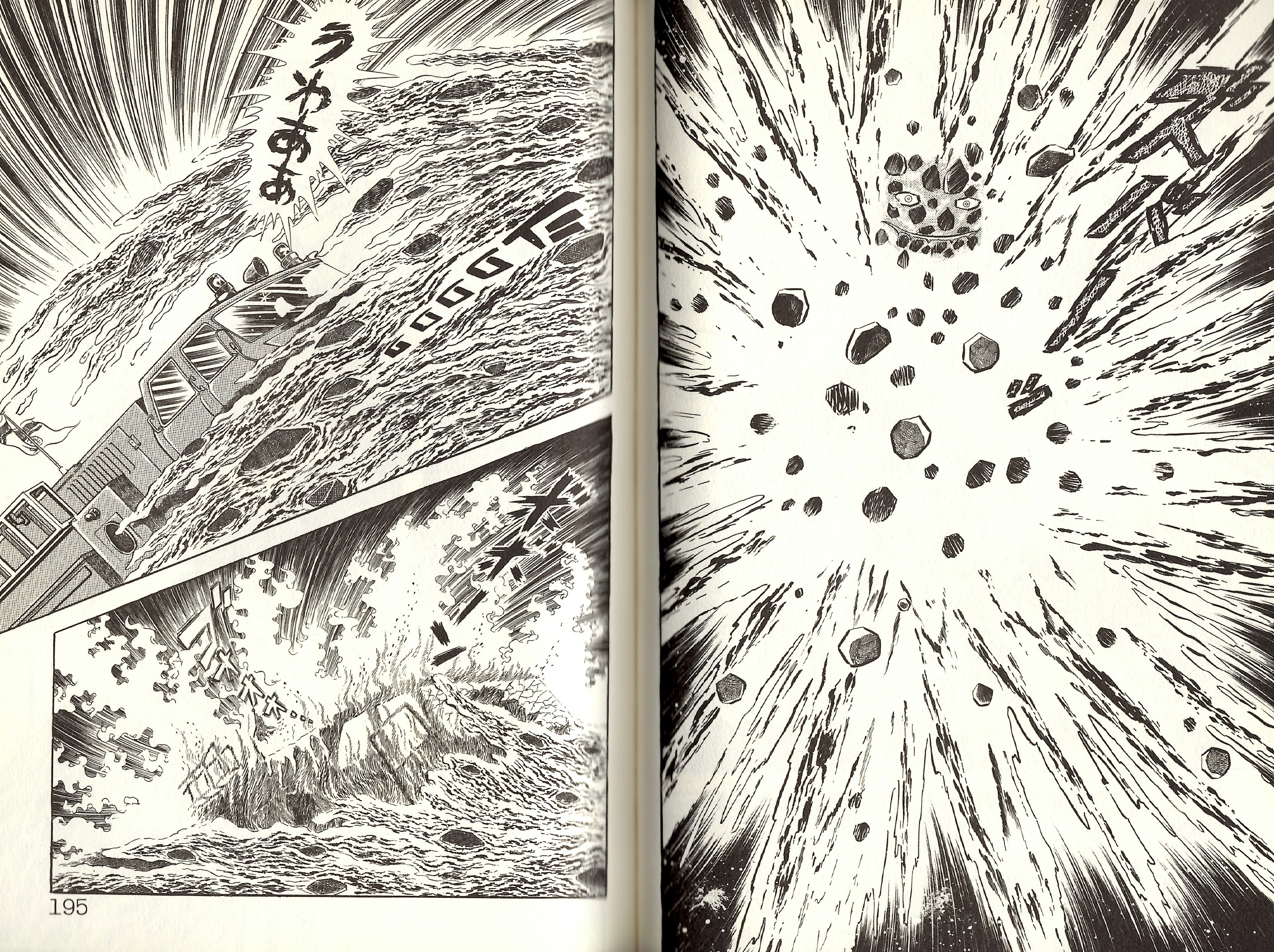
 『沈黙の艦隊 第26巻』


 『ベルセルク 第38巻』




 ブームに乗っかってみました。嬉野雅道さんご本人関係者各位ご本人には良い事が流星禹のようにあるでしょうたぶん。ゴミズは処刑ズ。2024121608:07(日本時間)。


 『おこう紅絵暦(べにえごよみ) 244-269ページ』


.png)
.png)
.png)
.png)
.png)





 すいませんね。このラドンのDVDを利用した3次元(ですよ)の同心円。中心の○が爆心点。
 だから被害も爆心地から何百メートルの、ではなく、爆心点から何百メートルのほうが重要では。だから被害も平面でみたらマダラになるというか。地形も関係するでしょうし。


.png)
 ※これ、言われて☝見る☝と、すごい段差ない? ☝2段でこれぐらい?2023073112:11(日本時間)。


 『ヒトラーの戦い 第8巻 402-463ページ』


 『源内なかま講 120-147ページ』


 "The Russian Imperial Family in 1888. Crown Prince Nicholas is in the back center"












.png)


.png)

.png)

.png)
.png)

.png)

.png)
.png)

.png)

.png)
.png)
.png)
.png)
.png)

.png)
.png)
.png)
.png)
.png)
.png)
.png)


 大分県警提供(自殺じゃないよ処刑だよ)。

.png)