amaterasu kingdom dimensionsⅥ-26-Mission for My CountryⅡ.
de.
“ソ聯(ソ連ではなく)のhuntが、大きく中国に食いこむことにもなる”もあれば、漢民族、ソ連の名前は捨身として忘れてください、「このままでは、せっかく築き上げた我が“人食いの”天下(4千年?)が瓦解してしまう」。“かれは今の中国の政治は文化を劃一化(かくいつか)しようとするものだ”の“劃”怪しいし。


"ソ聯/Soviet Union (not ソ連/Soviet Union)"

“ソ聯(ソ連ではなく)のhuntが、大きく中国に食いこむことにもなる”
"This will also mean that the Soviet Union's (not the Soviet Union's) hunt will penetrate significantly into China."


“ソ聯(ソ連ではなく)のhuntが、大きく中国に食いこむことにもなる”もあれば、
Based on the above, I also suggest the idea that "the Soviet (not the Soviet Union) hunt will significantly penetrate China's territory."


漢民族、ソ連の名前は捨身として忘れてください、
Please disregard the names of the Han Chinese and the Soviet Union for the moment, as both in this context refer to "self-sacrifice."


「このままでは、せっかく築き上げた我が“人食いの”天下(4千年?)が瓦解してしまう」。
"If things continue like this, the reign of us cannibals (4,000 years?), which we have painstakingly built with tears of blood, will crumble."


“かれは今の中国の政治は文化を劃一化(かくいつか)しようとするものだ”の“劃”怪しいし。
The character "劃" in "He says that current Chinese politics are trying to unify/劃一化 culture" seems suspicious.

AI Overview
Standardization refers to the process of unifying things, ideas, and actions, eliminating differences and making them the same. While this can be useful for efficiency and quality stabilization, there are concerns about the loss of individuality and diversity. It is a term often used in business, education, and society in general when unifying rules and evaluation standards.
Dictionary of Work, Companies, and Annual Income +1
Main Characteristics and Related Information
・Advantages: Efficiency, quality improvement, assurance of fairness.
・Disadvantages: Loss of individuality and creativity, lack of flexibility.
・Synonyms: Standardization, unification, uniformity.
・Antonyms: Diversification, individualization.
Wiktionary +4

In business settings, it is often used in phrases like "uniform service" or "uniform education," referring to a homogeneous and unremarkable state.

In business settings, the term is often used to describe a state that is uniform and lacks distinctive features, such as "standardized service" or "standardized education."


Related Question
Are the Soviet Union and Russia the same country?
Present-day Russia is one of the 15 independent states that were established after the collapse of the Soviet Union. Therefore, we often get asked questions like, "I don't understand the difference between Russia and the Soviet Union," or "Is Russia communist?" However, Russia and the Soviet Union are not the same country, and Russia is not communist.


AI-generated summary
The character "聯" (ren) means to be connected, to line up, or to place two things side by side (radical: ear, 17 strokes). It is almost synonymous with "連" (ren), but is used in more formal expressions and proper nouns (e.g., 聯合ニュース/Yonhap News) to represent organizations, alliances, or pairs of things, such as in "連合/rengo" (union), "聯邦/renpo" (universal state), "聯絡/renkaku" (contact), and "対聯/tai-ren" (counter-union). Synonyms include "連/ren" (connection), "繋/tsunagi" (connection), "連なり/tsuranari" (connection), and "連結/renkaku" (linking).
Kanji Pedia +4


Detailed Information
Pronunciation: On'yomi (Sino-Japanese reading): "Ren," Kun'yomi (Japanese reading): "Tsura(naru)," "Tsura(neru)."
Kanji Proficiency Test: Grade Pre-1.
Characteristics: This is an old/variant character outside the list of commonly used kanji, and is often replaced with "連" in modern Japan.

AI Summary
The kanji character "劃" means to limit, divide, separate, or the stroke of a character. It is often replaced with the commonly used kanji "画" (e.g., 計画, 区), and when used in the phrase "劃する (kakusuru)," it means "to clearly separate." It has 14 strokes and belongs to the "刀" radical.
Kanji Pedia +4


Main Usages and Compound Words
・劃然 (kakuzen): Clearly defined or separated.
・区劃 (kukaku): Dividing an area.
・劃策 (kakusaku): Planning and executing a plan.
・劃する (kakusuru): To draw a line to distinguish.
Kanji Pedia +3
Synonyms and Related Kanji
・画・畫: Commonly used kanji and old form of "劃" (often used interchangeably).
・分・区・限: Synonyms representing areas or restrictions.
Kanji Pedia +1
It has 14 strokes and is included in the 刀 radical (katana).
de.
劃一。Its structure is like this. August 23, 2018




で。2026041910:28(日本時間)。
で。2023053010:02(日本時間)。
"[英語スピーチ] 米大統領選挙敗北承服演説 ヒラリークリントン Hillary Clinton 日本語字幕 英語字幕English subtitleJapanese subtitle"
"ヒラリー・ロダム・クリントン氏を迎えて/A Conversation with the Honorable Hillary Rodham Clinton"
142,651 回視聴 2020/02/10
過去2016年に、ドナルドトランプさんに米国の大統領選挙での敗北後、ヒラリークリントン氏の敗承服演説です。
敗北より辛いことが敗北後の演説という話があります。敗北の痛みから抜け出す前にスピーチを準備することは容易ではないでしょう。特に2016年米国の大統領選挙では、多くの人がヒラリークリントン氏の勝利を予想していたが、結果的に敗北したので、彼女の精神的衝撃がもっと大きいだっと思います。
英語の発音がきれいで全体的に難しい単語の使用をせずに、各文章も比較的短い方です。英語の勉強をするにも良い教材だっと思います。
今日も楽しんでください。
————————————————————————
Copyright Disclaimer Under Section 107 of the Copyright Act 1976, allowance is made for "fair use" for purposes such as criticism, commenting, news reporting, teaching, scholarship, and research. Fair use is a use permitted by copyright statute that might otherwise be infringing. Non-profit, educational or personal use tips the balance in favor of fair use.
————————————————————————
► YouTube Fair Use: https://www.youtube.com/about/copyrig...
1) This video is for educational purposes.
2) This video modifies an original work by adding texts to the work.
3) This video borrows very small bits of material from an original work.
4) This video does not harm the copyright owner’s ability to profit from his or her original work.
🔵ATTRIBUTION 🔵
Hillary Clinton FULL Concession Speech | Election 2016
2,210 回視聴 2022/10/27
笹川平和財団では、元米国国務長官で女性の権利や人権を擁護する世界で最も影響力ある指導者の一人、ヒラリー・クリントン氏をお迎えし、国連事務次長・軍縮担当上級代表を務められる中満泉氏との対談イベントを2022年10月20日に実施しました。現代の傑出した二人の女性指導者の対話をぜひご視聴ください。
The Sasakawa Peace Foundation was thrilled to welcome the Honorable Hillary Rodham Clinton, former U.S. Secretary of State, world leader, and steadfast advocate for women’s rights, for a conversation with Ms. Izumi Nakamitsu, Under-Secretary-General and High Representative for Disarmament Affairs.
For details about the event: https://www.spf.org/en/seminar/list/2... from spfnewsさんのyoutubeチャンネル。
2024020808:33(日本時間)現在シリーズ本編は持っていませんが。
"【予告編】ビル・クリントンが語るアメリカ大統領史 [Trailer] American presidential history told by Bill Clinton"
717 回視聴 2023/02/01 #ヒストリーチャンネル
<配信サイト>
・RakutenTV:https://tv.rakuten.co.jp/content/441494/
・Amazonプライムビデオ:https://www.amazon.co.jp/gp/video/det...
「ビル・クリントンが語るアメリカ大統領史」
米史上でも最も激動の任期を務めた元大統領の一人、ビル・クリントンが、独自の目線でアメリカ大統領史を語る!歴代大統領によってもたらされた歴史的瞬間を、人種、ビジョン、経済、極端主義、権利、国際関係という6つのテーマから検証。世界最大の国家が辿った重要な変遷が紐解かれる。
各動画配信サービスでもヒストリーの人気作品を配信中!
▶︎ Amazon Prime Videoチャンネル: http://bit.ly/AmazonPrime_HISTORY
▶︎ Hulu: http://bit.ly/Hulu_HISTORY
▶︎ U-NEXT: https://video.unext.jp/browse/feature...
HISTORY公式 YouTube / historyjp
- - - - - - - - - - - - - - - - - - - - - - - - - - - - - - - - - - - - - - - - - - - - - - - -
Twitter: / historyjp
Facebook: / history
- - - - - - - - - - - - - - - - - - - - - - - - - - - - - - - - - - - - - - - - - - - - - - - -
#ヒストリーチャンネル
ゴミズは処刑ズ。
de.
が、ここは矛盾(そういえば、読んだことはないのですが毛沢東さんに矛盾論てありましたね。というかあの「人民内部の」、がそうなのか?)も気にせず、とりあえず現実の国境紛争などに関しては、103ページからの、20世紀初頭の話ですが、“当時の帝政ロシアは中国に遠慮をし、結局、外モンゴルの範囲内での自治だけを支援することにした。ロシアはさらに中国と交渉し、キャフタ協定(一九一五年)をむすんだ。この協定が、今のモンゴル人民共和国の版図の上での原形になっており、モンゴル側にもべつだんの不服はなさそうである。”が、結局のところ真実なのだろうな、で。もちろん、人類自決(self‐determination?)が当たり前、前提で。


(そういえば、読んだことはないのですが毛沢東さんに矛盾論てありましたね。というかあの「人民内部の」、がそうなのか?)
Speaking of which, I haven't read it myself, but Mao Zedong-san did write an essay called "On Contradiction." Or rather, is the quote from Mao Zedong-san that was cited in that electronic dictionary, "(…Contradiction exists) within the people," part of that essay?


が、ここは矛盾も気にせず、とりあえず現実の国境紛争などに関しては、103ページからの、20世紀初頭の話ですが、“当時の帝政ロシアは中国に遠慮をし、結局、外モンゴルの範囲内での自治だけを支援することにした。ロシアはさらに中国と交渉し、キャフタ協定(一九一五年)をむすんだ。この協定が、今のモンゴル人民共和国の版図の上での原形になっており、モンゴル側にもべつだんの不服はなさそうである。”が、結局のところ真実なのだろうな、で。
However, without worrying about contradictions, regarding actual border disputes, I think the following from page 103 of Shiba Ryotaro-san's "Record of the Steppe" is ultimately true (Of course, this itself is a story from the early 20th century): "At that time, Imperial Russia was considerate of China and ultimately decided to support autonomy only within the boundaries of Outer Mongolia. Russia further negotiated with China and concluded the Kyakhta Agreement (1915). This agreement is the prototype for the current Mongolian People's Republic in terms of its territory, and it seems that the Mongolians have no particular complaints."

もちろん、人類自決(self‐determination?)が当たり前、前提で。
Of course, this assumes that human self-determination is a given.


で。2026042008:39(日本時間)。
3分もたんとはゼットンさん(星人さんではなく)が魅惑的すぎたのだな。あることあること。2026042117:35(日本時間)。
"<特別配信>『ウルトラマン』第39話「さらばウルトラマン」【ウルトラマンシリーズ60周年記念】-公式配信-"
ゴミズは処刑ズ。
で。
"ウルトラマン 第30話「まぼろしの雪山」【ウルトラチャンネルセレクション1】ウルトラマン55周年記念配信 (wikiによると1967年2月5日放送)""『ウルトラマン』第37話「小さな英雄」ウルトラ空想科学時間02 「Stay At Home With ULTRAMAN」-ウルトラマン基金- (wikiによると1967年3月26日放送)"
この"ウルトラ空想科学時間"で持っているのはこれだけです。
で。


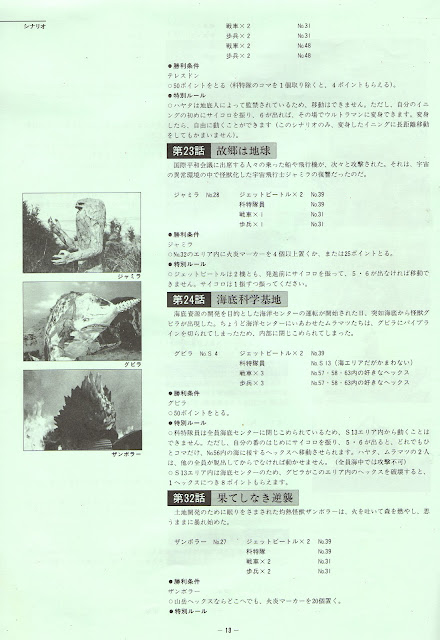





裏箱の表記によると"特殊武器(能力)カード"は13枚なので、冷凍光線は他のカードを流用するか、自作しましょう (このころの?テレビSF系シミュレーションゲームではよくある話です・笑)。


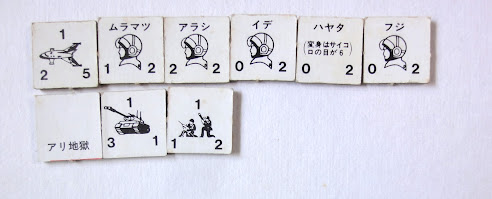


『バンダイIFシリーズ ウルトラマン』
そういえば、おれは未見ですが、当時のノベライズ版"ウルトラマン"(たしか番組の脚本家の方が)終盤、どこかの星でかで地球征服打倒ウルトラマンを目指す宇宙人会議が開かれ、その参加宇宙人の一人がボソッと"ゼットンよ早く育て"とつぶやくシーンがあるそうですが、たしか(不確か)、テレビのウルトラマンの戦闘行動も別に説明はされないけどちゃんと意味があり、番組最終盤ではゼットン以外の怪獣の戦闘行動にも別に説明はされないけどちゃんと対ウルトラマンの研究成果が表れている場合があるとか。で、テレビではイデ隊員が作った科特隊の新兵器でゼットンを倒しましたが、最初のシナリオでは、対"対ウルトラマン戦法"でゾフィー兄さんがゼットンを倒すことになっていたとか。
"ウルトラファイト vol.1"
現在持っている映像のウルトラファイトはこれだけです(子供のころ買ってもらったウルトラセブン編のレコードはある)。
"初公開!ウルトラマンの裏のウラ 1989年3月21日 TBS"
"ウルトラマンを作った男たち"
amaterasu kingdom dimensionsⅡ‐32-4。
で。2026042008:18(日本時間)。
何日か前、2日ぐらい?に県境不快という言葉を思いつき、"まさかユダヤ人のヒトラーさん、自民族の処遇に不満を持ち仲間とともに一芝居"とか、書けっつうことか、とか思いましたが、さておき、当時のコーディネートはこーでねーとかもしれませんが、南ア時代のガンジーさん何となくヒトラーさんにもみえますね。
"from GANDHI"
de.


2014/03/09 18:00
"毛沢東の中国ができあがるのは、日本の敗戦から四年後の一九四九年である。その直後に、毛沢東の中国はソ連との友好同盟条約を結んだ、しかし両国の関係はほどなく軋(きし)んだ。やがて断絶同然になり、一九五六年前後、毛沢東は、ソ連式の社会主義建設と縁を切って、②中国独自の路線をうち出した。独自の路線とはいえ、⑤それに見合う具体案などはなかった。とりあえず既存の村落をそのまま「人民公社」にすることと、生産を励まして③「大躍進」させることが、毛沢東路線というものになった。いずれも蹉跌(さてつ)してしまう。
2014/03/09 18:00
"Mao Zedong's China was established in 1949, four years after Japan's defeat. Immediately afterward, Mao Zedong's China signed a Treaty of Friendship and Alliance with the Soviet Union, but relations between the two countries soon became strained. Eventually, they were practically severed, and around 1956, Mao Zedong broke ties with Soviet-style socialist construction and put forward ②a unique Chinese line. However, despite being a unique line, there were no ⑤concrete plans to match it. For the time being, the Mao Zedong line consisted of converting existing villages into "people's communes" and encouraging production ③to achieve the "Great Leap Forward." Both of these failed.


AI-generated summary:
People's Communes (人公社) were large-scale collective agricultural organizations implemented in rural China from 1958 to the early 1980s, integrating politics, economics, military, and education (political-social unification). Established as part of Mao Zedong's "Great Leap Forward" policy, they included 99% of farmers, but led to decreased production efficiency and chaos, ultimately resulting in their dissolution under the reform and opening-up policy of the 1980s.
World History Window +3
Overview and Characteristics
・Unified Government and Society: An organization where administrative bodies (government) and production organizations (economy) were integrated, with the village (township) as the unit.
・Three-Level Ownership System: Land and assets were managed at three levels: public corporations, production battalions, and production teams, and cooperative labor was carried out at the production team level.
・Integration of All Functions: Not only agriculture, but also industry, commerce, schools (education), militia (military), and medical facilities (hospitals) were comprehensively managed.
・Driving the Great Leap Forward: Rapidly established from around 1958, it forcibly mobilized rural labor to increase steel production and develop infrastructure.
Gakken x Asahi Shimbun Kids Net +4
Outcome and Historical Impact
・Chaos: Average distribution and unrealistic production targets led to a decline in peasant morale, causing food shortages and famine (estimated to have resulted in tens of millions of deaths).
・Dismantling: With the progress of rural reforms since 1978, the 1982 constitution separated administrative and economic functions, and the system was completely dismantled by 1985.
・Subsequent Developments: The "Baogan Daohu" system (individual household contracting), where individual farmers undertook production, became widespread, replacing the people's communes.
Gakken x Asahi Shimbun Kids Net +6
Although idealized as a socialist experiment, the people's communes actually resulted in the exhaustion of rural economic structures.
Bank of Japan Homepage +1


AI-generated summary
The Great Leap Forward was a radical socialist construction and production-increasing movement conducted in China from 1958 to the early 1960s under the leadership of Mao Zedong. With the goal of "catching up with Britain in 15 years," it aimed for rapid development of agriculture and industry through massive labor input and the establishment of people's communes. However, due to flaws in planning and forceful implementation, it ended in a catastrophic failure, resulting in tens of millions of deaths from starvation.
World History Window +3
Overview and Characteristics of the Great Leap Forward
・Objective: To achieve heavy industrialization and increased agricultural production in a short period without relying on the Soviet Union, and to accelerate the transition to a communist society.
・Period: 1958 to the early 1960s (Second Five-Year Plan).
・Background: Mao Zedong's mass line and emphasis on mental strength, based on the idea that "the country can be strengthened by human power."
・Main Measures:
◦People's Commune System: Expanding rural organizations and integrating politics, agriculture, industry, and education.
◦Increased Steel Production Using Rough Furnaces: Producing iron in rural areas using crude furnaces without specialized technology (resulting in the mass production of unusable iron).
◦Mass Mobilization for Water Conservancy Construction: Concentrating manpower on infrastructure construction at the expense of agricultural work.
World History Window +4
Outcomes and Impact
1. Great Failure and Great Famine: Production targets that ignored objective conditions and the devastation of agriculture led to a severe food shortage. This resulted in a catastrophe that caused tens of millions of deaths from starvation over the three years from 1959 to 1961 (estimates range from approximately 16 million to over 46 million).
2. Mao Zedong's Resignation: Due to policy failures, Mao Zedong resigned as Chairman of the People's Republic of China and stepped down from the front lines (Liu Shaoqi and Deng Xiaoping implemented adjustment policies instead).
3. Deterioration of Relations with the Soviet Union: The strengthening of China's independent policy rapidly worsened relations with the Soviet Union.
World History Window +4
The Great Leap Forward is known in the history of the Communist Party of China as a cautionary event that resulted in "economic development failure and a large-scale humanitarian crisis."
Kyoto University Institute for Research in Humanities +1
で。2026042118:35(日本時間)。
"【服部先生、仰天!!】道場流!革命的な生姜焼き 道場六三郎の家庭料理レシピ~#125"


あのですね、レノンさんに「よ」と出てきていただけると何かと助かるんですが(笑)、何かと、あれ?その話題は?ってないですか?で、読んだら絶対に聴きましょう。で、そりゃそうですが、おれも生きています。


de.


AI-generated summary
"Hyakka Sōmei" (百家争鳴) refers to a situation where many intellectuals and cultural figures freely express their respective ideologies and academic opinions, engaging in lively debate. It originates from the active debates among the Hundred Schools of Thought during the Warring States period of ancient China, and in modern times, it is often used to describe situations in meetings and discussions where diverse opinions are exchanged.
Information, Knowledge & Opinion imidas +3
AI-generated summary
"Hyakka Sōmei" (百家争鳴) refers to a situation where many intellectuals and cultural figures freely express their respective ideologies and academic opinions, engaging in lively debate. It originates from the active debates among the Hundred Schools of Thought during the Warring States period of ancient China, and is now commonly used to describe situations in modern meetings and discussions where diverse opinions are exchanged.
Information, Knowledge & Opinion imidas +3
Main Characteristics & Meaning
・Reading: Hyakka Sōmei
・Meaning: A situation where people from diverse backgrounds actively present their arguments and engage in debate.
・Origin: From the situation in ancient China's Warring States period where many thinkers, such as Confucianists and Taoists, engaged in free debate.
・Background: Also known as a policy slogan proposed by the Chinese Communist Party in 1956, along with "Hyakka Seihō" (百花斉放), aimed at the development of culture and scholarship.
Oggi.jp +4
Usage Examples of Hyakka Sōmei (百家争鳴):
1. The discussion on the nuclear power issue was truly like a Hyakka Sōmei.
2. On this topic, a Hyakka Sōmei debate unfolded among the experts.
3. At the new product idea meeting, there was a lively exchange of opinions from both the sales and development departments, truly like a Hyakka Sōmei.
Information, Knowledge & Opinion imidas

Synonyms of Hyakuka Sōmei
・Hyakka Seihō (百花斉放): The simultaneous blooming of many different flowers. By extension, the free development of arts and scholarship.
・Hyakka Meisō (百家鳴争): Sometimes used with the same meaning as Sōmei (争鳴).
・Ronsō (論争): The act of arguing and debating by exchanging opinions.
Information, Knowledge & Opinion imidas +2

※ "Hyakka Ryōran" (百花繚乱) refers to the emergence of many outstanding talents at one time, and has a slightly different nuance from "Hyakka Sōmei" (百家争鳴), which describes a lively debate.
Lizmerit Co., Ltd. +1
ともかく①毛沢東は、その④前に、新路線がどうあるべきか⑥のヒントを得るために、「⑦百家争鳴」という大運動を⑨おこさせた。⑧政府主導で展開された。百花斉放(せいほう)・百家争鳴という対句(ついく)が連呼されるなかで、運動はツェベクマさんらの住む辺疆のフフホトにまでおよんだ。
In any case, ④before that, ①Mao Zedong ⑨launched ⑦a large-scale movement called "百家争鳴" ⑥to get hints on what the new policy should be. It was carried out ⑧under government leadership. Amidst repeated calls of the couplet "百花斉放" and "百家争鳴," the movement reached as far as Hohhot in the frontier region where Tsebekma-san and others lived.


AI Overview
Parallel processing is a technique that divides one large task into multiple smaller tasks and executes them physically simultaneously using multiple processing units (such as CPU cores). This significantly reduces processing time and achieves high speed.
IT Terminology Dictionary e-Words +3
Specific Examples and Characteristics
・Distributed Data Processing: 1 million data points are processed simultaneously by 10 cores, 100,000 at a time.
・Applications: Searching large databases, SQL processing, image/video processing, simulation.
・Benefits: Significantly reduced processing time, improved throughput.
・Technical Terms: Multi-core processor, multi-processing.
Saison Technology Co., Ltd. +4
Synonyms/Related Terms
・Concurrent Processing: Rapidly switching between tasks on a single CPU to appear logically simultaneous (parallel processing is physically simultaneous).
・Multitasking: A technique for managing multiple tasks by switching between them.
・Distributed Processing: Processing tasks using multiple computers (nodes).
BOD Co., Ltd. +2
Unlike serial processing (sequential processing), this is a highly effective speed-up technology when processing independence is high.
Saison Technology Co., Ltd. +1


Related Question
What does "TSUIKU" mean?
In poetry and prose, it is a literary technique that involves arranging two (or more) contrasting or similar phrases or sentences.
で。2026042213:12(日本時間)。
"ながさき原爆記録全集 第15回 総集編 2016年第53回ギャラクシー賞報道活動部門奨励賞 ネット版 D吉村文庫/Nagasaki Atomic Bomb Records Complete Collection, 15th Edition, Compilation, 2016 53rd Galaxy Awards, Journalism Category Encouragement Award, Online Version, D Yoshimura Bunko"
de.
[※日本では漢文を読むとき読み下し文という伝統が]


AI-generated summary
Yomikudashi-bun (読読文) refers to a type of Japanese text ("kundoku-bun") that is written by rearranging classical Chinese texts (Hakubun) according to Japanese word order, using kanji characters such as kaeriten and okurigana, and adding hiragana for particles and auxiliary verbs.
It is a method of making the original text readable directly as Japanese, and is also called kakikudashi-bun (書き着下文).
Wikipedia +2

AI-generated summary
Hiragana are a unique Japanese syllabic script (kana) created by simplifying the cursive form of kanji. Derived from Man'yōgana during the Heian period, they were primarily used in women's literature and letters. In modern Japanese, they are used for particles, auxiliary verbs, native words, and okurigana (suffixes), and are characterized by their rounded script that forms the basis of writing.
Kokugakuin University +4


AI-generated summary
"Hakubun" refers to the original classical Chinese text composed solely of Chinese characters, without any diacritical marks, suffixes, or punctuation. It is a "raw" text where the reader must independently fill in the reading and grammatical structure, and is mainly found in original classical texts and exam questions. Conversely, when diacritical marks are added to this text to allow it to be read in Japanese word order, it is called a "kundokubun" or "kakikudashibun."
Keiso Cram School +6
[※日本では漢文を読むとき読み下し文という伝統が]
[※In Japan, there is a tradition of using Yomikudashi-bun when reading classical Chinese texts.]
2014/03/09 18:00
"毛沢東の中国ができあがるのは、日本の敗戦から四年後の一九四九年である。その直後に、毛沢東の中国はソ連との友好同盟条約を結んだ、しかし両国の関係はほどなく軋(きし)んだ。やがて断絶同然になり、一九五六年前後、毛沢東は、ソ連式の社会主義建設と縁を切って、②中国独自の路線をうち出した。独自の路線とはいえ、⑤それに見合う具体案などはなかった。とりあえず既存の村落をそのまま「人民公社」にすることと、生産を励まして③「大躍進」させることが、毛沢東路線というものになった。いずれも蹉跌(さてつ)してしまう。ともかく①毛沢東は、その④前に、新路線がどうあるべきか⑥のヒントを得るために、「⑦百家争鳴」という大運動を⑨おこさせた。⑧政府主導で展開された。百花斉放(せいほう)・百家争鳴という対句(ついく)が連呼されるなかで、運動はツェベクマさんらの住む辺疆のフフホトにまでおよんだ。


①毛沢東は②中国独自の路線を③「大躍進」させる④前に⑤それに見合う具体案⑥のヒントを得るため「⑦百家争鳴」という大運動を⑧政府主導で⑨おこさせた。
Before launching the "Great Leap Forward" to establish China's own unique path, Mao Zedong initiated a large-scale movement called "Hundred Schools of Thought" (Hundred Schools Contesting) under government leadership to gather hints for concrete plans that would align with that path.
あんど。
2014/03/09 18:00
"Mao Zedong's China was established in 1949, four years after Japan's defeat. Immediately afterward, Mao Zedong's China signed a Treaty of Friendship and Alliance with the Soviet Union, but relations between the two countries soon became strained. Eventually, they were practically severed, and around 1956, Mao Zedong broke ties with Soviet-style socialist construction and put forward ②a unique Chinese line. However, despite being a unique line, there were no ⑤concrete plans to match it. For the time being, the Mao Zedong line consisted of converting existing villages into "people's communes" and encouraging production ③to achieve the "Great Leap Forward." Both of these failed.
In any case, ④before that, ①Mao Zedong ⑨launched ⑦a large-scale movement called "百家争鳴" ⑥to get hints on what the new policy should be. It was carried out ⑧under government leadership. Amidst repeated calls of the couplet "百花斉放" and "百家争鳴," the movement reached as far as Hohhot in the frontier region where Tsebekma-san and others lived.
①Mao Zedong put forward ②a unique Chinese line③to achieve the "Great Leap Forward④before that, ⑤concrete plans to match it⑥to get hints on⑦a large-scale movement called "百家争鳴"⑧under government leadership⑨launched


america/heaven十re-kannan.
で。2026042313:58(日本時間)。


"『マジンガーZ対暗黒大将軍』令和6年能登半島地震 復興応援配信【公式】"
de.


あくまでも、党という頂上からの運動で、最高責任者は毛沢東の意をうけた党幹部の宣伝部長陸定一(ていいつ)だった。要するに共産党のために知恵を出せ、ということであった。これより前、中国共産党はさまざまな思想をブルジョワ思想として痛烈に批判した。このため中国の学術、芸術、文芸界は、萎靡(いび)しきってしまい、たれもが党に面従するだけで日をすごしていた。党は、その空気を打破しようとした。"
This was a movement originating from the party's top position, with the ultimate authority being Lu Dingyi, the head of the party's propaganda department, who acted on Mao Zedong's orders. Essentially, it was a call to use one's ingenuity for the sake of the Communist Party. Prior to this, the Chinese Communist Party had harshly criticized various ideologies as bourgeois. As a result, China's academic, artistic, and literary circles had become stifled, and everyone spent their days merely outwardly obedient to the party. The party sought to break this atmosphere.


As a result, China's academic, artistic, and literary circles withered away, and everyone spent their days merely outwardly obeying the party.
As a result, China's academic, artistic, and literary circles have completely declined, and everyone spends their days merely outwardly obeying the party.
As a result, the academic, artistic, and literary worlds of China have completely declined, and everyone spends their days merely outwardly obeying the party.
As a result, China's academic, artistic, and literary circles became utterly corrupt, and everyone spent their days merely outwardly obeying the party.
As a result, China's academic, artistic, and literary circles have fallen into complete decline, and everyone spends their days merely outwardly obeying the party.


The party tried to break that atmosphere.
My father tried to break that atmosphere.
My father tried to break that atmosphere.
Milk tried to break through that air.
Tou tried to break that atmosphere.
Mune tried to break that atmosphere.
The questioner tried to break that atmosphere.
Visitor U tried to break that atmosphere.
Tou tried to break that atmosphere.
At that point, he tried to break that atmosphere.
The tower tried to break through that atmosphere.
Tang tried to break that atmosphere.
Sugar tried to break through that air.
Soba tried to break the tension.
Heaven tried to break through that atmosphere.
Tou tried to break through that atmosphere.
Ten tried to break the tension.
They tried to break down the partisan and entrenched atmosphere.
They tried to break through that atmosphere by traversing it.
The party sought to break this atmosphere.
で。2026042410:57(日本時間)。
"「書生の名推理」第5話 開封府~北宋を包む青い天~ ポニーキャニオン WE LOVE K"
"「明と暗」第6話 開封府~北宋を包む青い天~ ポニーキャニオン WE LOVE K"
"「狙われた幼帝」第7話 開封府~北宋を包む青い天~ ポニーキャニオン WE LOVE K"
de.


◆百花斉放(せいほう)・百家争鳴:1956~57年初頭、中国共産党が提唱した学問、思想、文化、芸術などの<各分野における自由な発言を奨励した運動。
56年5月2日毛沢東が最高国務会議で、共産党と民主諸党派との「長期共存、相互監督」を提唱。
(1)学術の発展のための自由な討論、創作、批評、意見の発表の自由の保障。
(2)文化、芸術と政治を同一視する偏向の排除。
(3)思想問題を行政命令式に解決することの回避などを主張した。
9月の八全大会においても劉少奇副主席が政治報告のなかで、科学と芸術の発展のためには、「百花斉放・百家争鳴」の方針によって自由に論議し合い、自由に競い合うことが必要であり、行政上の命令によって指導を行うべきではないと述べた。毛沢東も(略)「大胆に発言し、批判し、論争し、まちがった議論を恐れず、毒素を含んだものを恐れず、相互の論争と批判を活発にすること」を強調。
◆Hundred Flowers Campaign: A movement advocated by the Communist Party of China in early 1956-57 to encourage free expression in various fields such as scholarship, thought, culture, and art.
On May 2, 1956, Mao Zedong proposed "long-term coexistence and mutual supervision" between the Communist Party and democratic parties at the Supreme State Council.
(1) Guarantee of freedom of free discussion, creation, criticism, and expression of opinions for the development of scholarship.
(2) Elimination of bias that equates culture, art, and politics.
(3) Avoidance of resolving ideological issues through administrative orders.
At the Eighth National Congress in September, Vice Chairman Liu Shaoqi stated in his political report that for the development of science and art, it is necessary to freely discuss and compete under the "Hundred Flowers Campaign" policy, and that guidance should not be provided through administrative orders. Mao Zedong also emphasized (omitted) "to speak boldly, criticize, debate, not be afraid of wrong arguments, not be afraid of poisonous things, and to actively engage in mutual debate and criticism."


AI-generated summary
Bias refers to a bias in thinking or reporting, or the (intentional?) physical bending of the direction of a beam of light, such as an electron beam. Socially, it refers to bias in ideology or reporting; technically, it refers to coils in electronic devices, and is often used in a negative context, such as "biased reporting" or "biased opinion."
University of Tokyo Newspaper Online +3
Main meanings and usage
・Bias in thinking: A lack of neutrality due to a bias towards a particular position or ideology.
◦Example: Biased reporting, conservative bias.
・Physical direction change: Changing the direction of a beam of light, such as an electron beam, using an electromagnetic field.
◦Example: Deflection coil (CRT television, etc.).
Information, knowledge & opinion imidas +2
Background of "biased reporting"
In the media, "bias" can refer to information manipulation by news organizations with specific political intentions, and is often a topic of discussion when the credibility of the media is questioned.
University of Tokyo Newspaper Online +1
・Cause: Beyond the intentions of the media, a significant factor is the "demand side"—the preference for news that supports one's own worldview.
・Synonyms/Related terms: Bias, preconception, stereotype, unfairness, bias.
JBpress +2
Technical supplement:
In the fields of physics and electronics, the "deflection" effect, which changes the direction of electron beams by applying electric or magnetic fields, has been used in devices such as CRTs (cathode ray tubes) and oscilloscopes.

AI-generated summary
Prejudice is an unfavorable preconception, assumption, or biased view held towards a particular individual or group without objective evidence. Typical examples include having uniform images of race, gender, appearance, occupation, blood type, etc., and it carries the risk of leading to discrimination and disadvantageous treatment.
Adachi Ward Official Website +2
Main Characteristics and Details of Prejudice
・Definition: A "stereotype" that, accompanied by emotional elements, manifests as an unfavorable attitude.
・Unconscious bias: Prejudice held without conscious awareness, existing within everyone and shaped by experience and cultural background.
・Specific examples:
◦Gender role stereotypes ("Men work, women stay home").
◦Judgments based on appearance, age, or place of origin ("Blonde hair = frivolous," "Young people = inexperienced").
・Difference from discrimination: Prejudice is an "inner attitude," while discrimination is its manifestation as "action."
・Approach: It's important to acknowledge your own biases, make judgments based on facts, and respect diverse values.
Wikipedia +7
Because bias worsens relationships and hinders fairness, self-awareness is essential.
Appassionata +1


AI Overview
Bias refers to "biases," "preconceptions," and "prejudices" in thinking and data, where objective and rational judgment is distorted by unconscious assumptions. Specific examples include confirmation bias (gathering only information that supports one's own beliefs) and normalcy bias (underestimating abnormal situations). These require careful consideration in business and daily decision-making. Synonyms include prejudice, preconception, fixed idea, inclination, and distortion.
Kaonavi +5
Specific Usage Examples and Expressions
・"That opinion is biased (contains preconceived notions)."
・"The data exhibits selection bias (statistical bias)."
・"Eliminate bias and make a calm judgment."
・"Fall into psychological bias."
Wikipedia +2


Specific Usage Examples and Expressions
Representative Types of Biases
・Confirmation Bias: The tendency to gather only information that reinforces one's own beliefs.
・Normalcy Bias: The psychology of underestimating a crisis, such as during a disaster, by thinking "I'll be fine."
・Unconscious Bias: "Unconscious bias" towards gender, age, occupation, etc.
・Survivor Bias: The tendency to focus only on success stories and ignore failure stories.
ALL DIFFERENT +3
Business and Everyday Life Strategies
Bias is a natural psychological reaction that occurs in everyone, but in business, it can lead to unfair evaluations and irrational decision-making. Recommended countermeasures include making judgments based on objective data, incorporating diverse perspectives, and being aware of one's own biases (metacognition).
ALL DIFFERENT +4
で。2026042515:01(日本時間)。
今井寿さんだな。レイア姫とか。
"【公式】『ちいかわ』第318話「マイ時計/お風呂に行こう」※1週間限定配信<224(火)AM759まで>"
"【公式】『ちいかわ』第319話「うさぎの家①」※1週間限定配信<227(金)AM759まで>"
"【公式】『ちいかわ』第320話「うさぎの家②」※1週間限定配信<33 (火)AM759まで>"
"【公式】『ちいかわ』第321話「ドラ焼き布団/軸汁」※1週間限定配信<36 (金)AM759まで>"
"【公式】『ちいかわ』第323話「あのこを討伐②/強くなる」※1週間限定配信<313 (金)AM759まで>"
"【公式】『ちいかわ』第324話「下克上と特訓①」※1週間限定配信<317 (火)AM759まで>"
"【公式】『ちいかわ』第325話「下克上と特訓②」※1週間限定配信<320 (金)AM759まで>"
"【公式】『ちいかわ』第326話「下克上と特訓③」※1週間限定配信<324 (火)AM759まで>"
"【公式】『ちいかわ』第327話「下克上と特訓④」※1週間限定配信<327 (金)AM759まで>"
"【公式】『ちいかわ』第328話「下克上と特訓⑤」※1週間限定配信<331 (火)AM759まで>"
"【公式】『ちいかわ』第330話「あのことでかつよ①」※1週間限定配信<47 (火)AM759まで>"
"【公式】『ちいかわ』第331話「あのことでかつよ②」※1週間限定配信<410 (金)AM759まで>"
"【公式】『ちいかわ』第332話「武器/クリーム」※1週間限定配信<414 (火)AM759まで>"
"【公式】『ちいかわ』第333話「ダブルクリーム」※1週間限定配信<417 (金)AM759まで>"
"【公式】『ちいかわ』第334話「おちょコーラ/焼きカボチャ」※1週間限定配信<421 (火)AM759まで>"
"【公式】『ちいかわ』第335話「行ってみるか/叶うかも」※1週間限定配信<424 (金)AM759まで>"
"【公式】『ちいかわ』第336話「誘われたんだ/見守る」※1週間限定配信<428 (火)AM759まで>"
"【公式】『ちいかわ』第337話「生えた/チャーハン」※1週間限定配信<51 (金)AM759まで>"
de.


"「なんでも言え。めいめいが考えを出せ」というのがこの運動だったが、党としては積極的な社会主義建設に役立たせるための意見百出運動のつもりであって、党支配の一線を逸脱することをゆるすつもりはなかった。が、初動期、党は限定を設けなかったために、ひとびとはこれを「自由化」と錯覚し、各地や各分野で争鳴した。
The movement was based on the idea of "Say anything. Let everyone express their opinions," but the party intended it as a movement to encourage the generation of diverse opinions to be used for the active construction of socialism, and had no intention of allowing it to deviate from the line of party control. However, in the initial stages, the party did not set any limits, so people mistook it for "liberalization," and fierce debates erupted in various places and fields.


ほとんどが党を批判し、おだやかな場合でも、苦情や陳情をくりかえした。あわてた党は、火を消さねばならなかった。ほどなく百家争鳴運動をひっこめ、かわって「反右派闘争」というあたらしいスローガンを出し、さき争鳴した百家どもを弾圧した。
Most of them criticized the Party, and even the milder ones repeatedly filed complaints and petitions. The panicked party had to quickly extinguish the flames of criticism. Soon after, the Hundred Flowers Campaign was withdrawn, replaced by a new slogan, the "Anti-Rightist Campaign," and the Hundred Flowers, who had previously sympathized with the Communist Party's views and actively debated, were suppressed.


見様によっては、言わせておいて「右派」をあぶり出し、こんどはその連中を「大衆」に摘発させ、排除させたということになる。"
Depending on the perspective from which you look at it, it could be seen as a way to expose the "right wing" within the "masses" by letting them say whatever they wanted, and then having the "masses" expose and eliminate those same people.


[※非無かった]
[※They were not at fault]

[※反禹派闘争]
で。2026042613:23(日本時間)。

◆林 義郎(はやし よしろう、1927年〈昭和2年〉6月16日 - 2017年〈平成29年〉2月3日)は、日本の政治家、通産官僚。位階は正三位。
大蔵大臣(第97代)、厚生大臣(第62代)、衆議院議員(11期)などを歴任した他、日中友好議員連盟や日中友好会館の会長も務めた。from wiki.

◆小野寺 五典(おのでら いつのり、1960年〈昭和35年〉5月5日 - )は、日本の政治家。自由民主党所属の衆議院議員(10期)、自由民主党税制調査会長(第38代)、自由民主党宮城県連会長。
外務大臣政務官(第3次小泉内閣)、外務副大臣(第1次安倍改造内閣・福田康夫内閣)、防衛大臣(第12代・第17代・第18代)、衆議院沖縄及び北方問題に関する特別委員長、衆議院情報監視審査会長、衆議院予算委員長、自由民主党政務調査会長(第63代)、同政務調査会長代理を歴任した。from wiki.


そうそう、実際問題、それをみるとき、おれのあたまにはさゆみの顔がうかぶわけですが、今日の朝、5番街のエレナで、26日限定で、山口県産ひとめぼれが3,500円ちょい(税抜)で売ってたので、ちょうど昨日の夜で米が切れてたので、即決で買いました。2026042613:35(日本時間)。

◆長谷川 初範(はせがわ はつのり、1955年6月21日 - )は、日本の俳優。愛称は「ショパン」。
北海道紋別市出身。北海道紋別北高等学校、横浜映画放送専門学院(現・日本映画大学)演劇科卒業。ケイダッシュ所属。
来歴(抜粋)
1980年、特撮テレビドラマ『ウルトラマン80』(TBS)に主人公・矢的猛役で初主演。後に長谷川は、『80』までの昭和ウルトラシリーズと世界観がつながった2007年放送の『ウルトラマンメビウス』(CBC)にも、厳しいスケジュールを縫って同役に客演している。そのオファーに当たり、円谷プロダクションのプロデューサー・渋谷浩康から届いた「矢的先生への同窓会の招待状」としての熱い内容の手紙に、長谷川はいたく感動して出演を快諾したという。from wiki.
"<特別配信>『ウルトラマン』第26話「怪獣殿下(前篇)」【ウルトラマンシリーズ60周年記念】 -公式配信-"
ゴミズは処刑ズ。
de.


During the "Hundred Schools of Thought Contending," Brunsain, a professor at Inner Mongolia University in Hohhot, was particularly vocal in his opposition. He vehemently argued that current Chinese politics were attempting to homogenize culture. "The Mongolian people have their own unique culture. Their language, clothing, literature, and other aspects are different from those of the Han Chinese. If we do not cherish our culture, our nation will perish." The following year, he was singled out as a "rightist." Incidentally, Brunsain was not a party member. Neither was Tsebekma, and neither had any intention of becoming a party member. This also worked against him. The fact that Brunsain's father, now deceased, had previously held a position equivalent to a county chief in Inner Mongolia was another negative factor. His enthusiasm for teaching Mongolian literature to students was also cited as a drawback. Furthermore, inviting two scholars from the Mongolian People's Republic, also known as "Outer Mongolia," to give lectures was also considered one of his "charges."


"「百家争鳴」のとき、フフホトの内蒙古大学の教授だったブルンサインは、ひときわ争鳴した。かれはいまの中国の政治は文化を劃一化(かくいつか)しようとするものだ、とはげしく述べた。「モンゴル民族には、民族固有の文化がある。言語、服装、文学その他、漢民族とはちがうのです。文化を大切にせねば、民族がほろんでしまいます」翌年、かれは「右派」として槍玉(やりだま)にあげられた。ついでながら、ブルンサインは党員ではなかった。ツェベクマさんもそうで、二人とも党員になろうとも思わなかった。
During the "Hundred Schools of Thought Contending," Brunsain, a professor at Inner Mongolia University in Hohhot, was particularly vocal in his opposition. He vehemently argued that current Chinese politics were trying to homogenize culture. "The Mongolian people have their(our) own unique culture. Their(Our) language, clothing, literature, and other aspects are different from those of the Han Chinese. If we do not cherish our culture, our nation will perish." The following year, he was singled out as a "rightist." Incidentally, Brunsain was not a party member. Neither was Tsebekma-san, and neither of them ever considered becoming party members.


このことも、かれを不利にした。すでに故人になっているブルンサインの父が、以前、内蒙古で郡長程度の役についていたことも、わるい材料だった。またかれが、モンゴル文学を学生に教えることに熱心だったことも失点にあげられた。さらにはまた「外蒙古」といわれるモンゴル人民共和国から二人の学者をよんで講義させたことも、「罪状」の一つにされた。"
This also worked against him. The fact that Burunsain's father, who was already deceased, had previously held a position equivalent to a county chief in Inner Mongolia was another negative factor. His enthusiasm for teaching Mongolian literature to students was also cited as a drawback. Furthermore, inviting two scholars from the Mongolian People's Republic, also known as "Outer Mongolia," to give lectures was also cited as one of "his alleged crimes."


で。2026042709:54(日本時間)。


◆三億円事件(さんおくえんじけん)は、1968年(昭和43年)12月10日朝、東京都府中市で金融機関の現金輸送車に積まれた約3億円の現金が白バイ警察官に扮した男に奪われた窃盗事件である。正式な事件名は「現金輸送車強奪事件」である。通称では「三億円強奪事件」と呼ばれる。後に有楽町三億円事件・練馬三億円事件との区別のため、「府中三億円事件」とも称されることがある。犯人検挙に至らなかったことから、1975年(昭和50年)12月10日に刑事訴訟法250条における公訴時効が成立し、未解決事件となった。また1988年12月10日には、除斥期間の経過により損害賠償請求権も消滅した。from wiki.


◆古谷 敏(ふるや びん、(1943年〈昭和18年〉7月5日 - )は、日本の俳優、スーツアクター。ビンプロモーション元代表取締役社長。シンビンプロモーション所属。東京都港区西麻布出身。本名は同字異読の古谷 敏(ふるや さとし)[注釈 1/資料によっては読み仮名を「さとし」で記載している。]。
特撮テレビドラマ『ウルトラQ』で「ケムール人」と「海底原人ラゴン」を、『ウルトラマン』で主役ヒーローウルトラマンをスーツアクターとして、『ウルトラセブン』でウルトラ警備隊のアマギ隊員を顔出しで演じ、ウルトラシリーズの初期を支えた一人として知られる。特にウルトラマンは、古谷の体形を前提としてデザインが確定した。from wiki.
"<特別配信>『ウルトラマン』第27話「怪獣殿下(後篇)」【ウルトラマンシリーズ60周年記念】 -公式配信-"
ゴミズは処刑ズ。


で。2026042708:43(日本時間)。
amaterasu kingdom dimensionsⅢ‐42-9-2-爆心地からあれよあれよとやって来る衝撃波、ではなく、爆心点から爆心地まで直線を引いてグルっと球形360度、どこも爆心点からズドンの衝撃波でないと変ではなかろうかと。/あのですね、これも以前何度か書きましたが、2012、3年ごろ?"草稿集"のもとになる文章を書き始めたころ、と言っても、ネット環境になく、電子辞書と50冊ぐらいの本を元手に、あれやこれやとひたすらパソコンのメモ帳に書き写してたころ、当然、"おれは何をやっているのだろう"とおもうこともありましたが、そんなころ、おれの記憶にある昭和天皇の皇后さまがおれの夢の中に出てこられ、黙っておれを見つめ、両手をついて頭を下げられ、を、起きてもはっきり覚えてて、"おれのこれはやる意味あるんだ"と、おもったことがありました、電子辞書と50冊ぐらいの本を元手にあれやこれやとひたすらパソコンのメモ帳に書き写してたころのことです。20211006。
de.


で、話を戻し、あくまで、俺の考えですが、"ブルンサインは、ひときわ争鳴した"、これは毛沢東さんに対してだと思います。あるいは、"たれもが党に面従するだけで日をすごしていた。党は、その空気を打破しようとした"、の"打破しようとした""党"に対して、でもいいです、"毛沢東の意をうけた党幹部の宣伝部長陸定一(ていいつ)だった"、ここにもかかると思います。
Now, to get back to the main topic, and this is purely my personal opinion, I believe that when "Brunsain asserted his opinion particularly fiercely," the target of this 'assertion' was Mao Zedong-san.
"Everyone was just going through the motions of obedience to the party. The party tried to break that atmosphere."
Alternatively, it could be said that his 'assertion' was directed at the "party" that was "trying to break" that atmosphere.
"It was Lu Dingyi, the head of the propaganda department and a party official acting on Mao Zedong's orders."
I think it applies here as well.


[※打破しようとした、毛沢東さん、共産党への共鳴ですね、共振]
[※This shows empathy and resonance with Mao Zedong-san and the Communist Party, who tried to break through.]


AI-generated summary
Resonance is a physical phenomenon in which an object's amplitude increases rapidly when subjected to an external force with the same frequency as its natural frequency. Examples include the phenomenon of a swing swinging violently when pushed at a specific timing, or a glass breaking at a particular sound. This term is primarily used in the fields of acoustics and mechanics.
Try IT +4


・The difference between "resonance" and "vibration": While they have almost the same meaning, "vibration" is often used to refer to vibrations in general in physics, while "resonance" is often used specifically to refer to physical phenomena related to sound.
・By extension: In a figurative sense, "sincerely agreeing with or empathizing with someone else's thoughts or actions" can also be expressed as "resonance."
Try IT +7

AI-generated summary: Resonance is a phenomenon in which the amplitude of vibration increases significantly when an object or system receives vibrations of the same frequency as its "natural frequency" from an external source. A typical example is the increased swing amplitude when swinging a swing in the right timing. While this can cause machine failure, it is also used in applications such as radio tuning.
TDK Corporation +3

AI-generated summary
Natural frequency refers to the specific frequency (Hz) at which a structure or machine is most susceptible to vibration. It is determined by the shape, material rigidity (hardness), and mass (weight). When an external force is applied at this frequency, resonance occurs, and the amplitude increases significantly. It is an important physical quantity in the structural design of machinery and buildings to avoid failure and damage.
Cybernet Systems Co., Ltd. +4


"UC Engage Crossover Axis Arc"
聴こえるは"1983.10.17 "INSTANT LOVE TOUR" 京都BIG BANG"アンコール最終曲だけど、さておき、シマシマトランクスはこれからすぐたたむことをめいめい☺️に約束しようさておき、動画だとそうでもないな。レジ袋まとめて突っ込んでるのが昨日からお稲荷さんにみえる。2026043005:47(日本時間)。
"スマイレージ『タチアガール』(悪ガキッ Ver.)"


de.


So, "it's a movement from the top, the party," which in itself gives off a secret society vibe, and I shouldn't just leave it at that, but "The people of '94 are suffering," "Ultimately, I think it's the electorate that needs reform (ignoring the surrounding context)," and "the backward region of Asia," "realism"—I think these are things we shouldn't forget. However, considering the current state of Japan, I'm afraid I can't say that Japan was ever an "advanced region of Asia." And the object of their "spending their days merely outwardly obedient" is, of course, "the mud that Asian societies have been burdened with since the distant past." And neither Mao Zedong nor Jiang Qing were members of this "mud" party. Neither of them even considered becoming party members. I think this also worked against them, as they tried to break through it. However, I think that, as Shiba and Fukuda Teiichi wrote somewhere, "the devil should have been made visible and spoken of."


で、"あくまでも、党という頂上からの運動"、これはこれで秘密結社な感じもしてしまいますが、で、ぽんとそれだけおくのもなんですが、「94国民はつらいよ」、"つきつめれば、改革すべきは選挙民だとおもいます(前後の文脈を無視)"、そして"アジアの後進地帯""現実主義"、は、忘れてはいけないと思います、ただ、日本の現状を考えると、日本が"アジアの先進地帯"であった、とは残念ながら俺には言えません。
And, "This is, above all, a movement from the top, the party," this expression, depending on how our interpret it, can sound like a secret society.
However, I know this is a bit abrupt, but there's a collection of correspondence between Shiba Ryotaro-san and Fukushima Yasuo-san, the editor in charge of "Fūjinshō," titled "Another Fūjinshō."
From one section of that collection of letters, "94 It's Tough to Be a 'Citizen'," it says, "Ultimately, I think it's the electorate that needs reform (ignoring the context before and after this passage)." And the aforementioned phrases, "backward region of Asia" and "realism," are things we shouldn't forget.
However, considering the current situation in Japan, I unfortunately cannot say that Japan is an "advanced region of Asia."


AI Summary
"Fūjin" (風塵) refers to dust and sand blown up by the wind, or the turmoil and chaos of the secular world, or as a metaphor for something very light. In meteorological terms, it refers to the phenomenon of dust being blown around on the ground; metaphorically, it means a polluted world or turmoil. It is also the title of a short story collection by Ikemiya Shōichirō.
Wikipedia +2
Detailed Explanation of Meaning
・Physical Phenomenon: A phenomenon in which soil and sand from the ground surface are lifted into the air due to wind speed and dryness. It is distinguished as "low-wind dust" and "high-wind dust" depending on the degree of visibility impairment.
・Figurative Meaning: The troublesome mundane world, trivial matters, or war and turmoil in the world (e.g., "covered in wind dust," "a world of wind dust").
・Literary and Expressive Use: Used to express the transience of life, as in "lighter than wind dust."
Wikipedia +1


Related Works
*Fūjin* (by Shōichirō Ikemiya): A masterpiece collection (Kodansha Bunko) containing the title story depicting a new image of Tokugawa Ieyasu and six short stories depicting the harshness of bushido.
Kinokuniya Bookstore Web Store +1
Other Usage Examples
It is also used as a title referring to harsh conditions, such as in the NHK documentary program *Shin Bakusō Fūjin ~China Truck Drivers: Betting on Survival~*.
NHK


AI-generated summary:
"Shō" (抄) is a kanji character meaning to extract a part of a text or to create an excerpt (an abstract, a summary). It is mainly used for selecting documents, extracting relevant laws, and also to mean "to scoop out" or "to add annotations." Typical uses include "koseki shōhon" (abbreviated family register), "shōdokukai" (abbreviated reading group), "Chieko Shō", and "kansetsu hōrei (shō)" (excerpt of relevant laws).
The word "shō" (抄) doesn't simply mean "copy," but rather carries a strong connotation of "selecting and extracting" information from a large amount of data for a specific purpose.
"【※非常事態】マスコミが報じない..東京湾沿岸で年齢不詳の身元不明な水〇体が次々と発見された恐ろしく不気味な未解決事件7選!【ゆっくり解説】"
de.


で、"面従するだけで日をすごしていた"の面従対象はもちろん"アジアの社会がはるかな過去から背負いこんでいる泥"。そして、毛沢東さん、江青さん、二人ともこの"泥"の党員ではなかった。二人とも党員になろうとも思わなかった。このことも、かれ(ら)を不利にした。ということだとおもいます、あくまで打破しようとした。ただ、どこでしたか司馬さん福田定一さんがお書きになられていた"悪魔は顕在化して語られるべきであった"と思います。
So, the object of their "spent their days merely going through the motions of obedience" is, of course, "the mud that Asian societies have been burdened with since the distant past." And neither Mao Zedong-san nor Jiang Qing-san were members of this "mud" party. Neither of them even considered becoming party members. This also worked against hi(the)m. I think that's the truth of what happened. They tried to overthrow it at all costs. However, I believe it was somewhere that Shiba Ryotaro-san, whose real name is Fukuda Teiichi-san, wrote that "the devil should have been made visible and spoken of." I also agree with Shiba Ryotaro-san's opinion.


AI-generated summary
"Menjū" (面従) means pretending to be obedient in front of others or superiors, merely flattering and complying on the surface. It refers to a state where one is not inwardly obedient or criticizes behind someone's back. While it can be used alone, it is also frequently used as part of four-character idioms such as "menjū fukuhai" (面従腹背, meaning "inwardly disobedient") or "menjū kōgen" (面従後言, meaning "to speak ill of someone behind their back").
Information, Knowledge & Opinion imidas +4
Details & Characteristics
・Meaning: Obedience only on the surface; superficial obedience.
・Four-character idiom: "Menjū fukuhai" (面従腹背) is the most common, referring to a state of outward obedience while inwardly rebellious.
・Synonym: "Menjū kōgen" (面従後言, meaning "to flatter someone to their face, but speak ill of them behind their back").
・Background: The original term is a historical expression found in texts such as the *Book of Han*, and is used to describe poor behavior towards one's lord or superior.
Information, Knowledge & Opinion imidas +5
It is used to describe superficial obedience, and refers to situations where people comply while concealing criticism or dissatisfaction in environments such as workplaces where there is no trust or where orders are given unilaterally.

AI-generated summary
Human Face
"Human face (jinmen/ninmen)" refers to a human face, or an appearance resembling a human face. Figuratively, it can also refer to a person with a human face but no heart (a human face with a beastly heart), or to patterns or supernatural phenomena that resemble human faces, such as human-faced fish or human-faced sores.
Wikipedia +4
Main meanings and usage
・Physical human face: Simply a human face.
・Something resembling a human face: Something whose patterns or shapes resemble a human face (e.g., human-faced rock, human-faced pottery).
・Human-faced fish: A fish, such as a carp, with a pattern on its head resembling a human face.
・Human-faced sore: A supernatural or bizarre phenomenon where a wound on the body resembles a human face.
・Figurative expression (human face with a beastly heart): Someone who looks human but has the heart of a dog or beast and is cruel.
Anjo City +6
This term is used in literary expressions such as "Jinmen Toka" (人面桃花), which describes the beautiful contrast between a human face and a flower, and it also appears in the ancient Shōbōgenzō (1231-1253).
で。2026043006:08(日本時間)。
"【クルミサイズ】ダチョウとツイフェミ女さん!共通点を徹底解説!【ゆっくり解説】"
de.


["決定的にわるかったのは、(ブルンサインさんが)日本で教育をうけて、日本語が達者だったということである。集会で吊(つる)しあげられ、壁新聞で攻撃され、毎日が碾臼(ひきうす)でひかれるようにさいなまれた。ツェベクマさんという人が、こういう状態に耐えられるはずがなかった。彼女は、何事にも意見をもっていたし、しかも即座に、ナイフをきらめかすように切りかえすことができた。そういう彼女でも耐えた。なにかいえば、殺されるかもしれないという恐怖があった。ある夜、「日本語を覚えたことで、どうしてこんなひどい目に遭うのか」と、独りで叫び、身の不運をのろったこともあったらしい。ついには、身辺に危機を感ずるようになった。
"The critical problem was that (Brunsain-san) had received an education in Japan and was fluent in Japanese. She was publicly shamed at rallies, attacked in wall newspapers, and tormented every day as if being ground in a millstone. There was no way someone like Tsebekma-san could endure such a situation. She always had an opinion on everything, and could instantly retort with the gleam of a knife, yet even she endured this situation. She lived in fear that if she said anything, she might be killed. One night, she apparently cried out to herself, "Why am I suffering such a terrible fate just because I learned Japanese?" and cursed her misfortune. Eventually, she began to feel that her and her child's safety was in danger.


AI-generated summary
"Public shaming" refers to the act of surrounding one or a few individuals with a large group, severely questioning and criticizing them, and publicly humiliating them. It primarily refers to scapegoating reprimands or one-sided intimidation in the workplace, and is considered a typical example of power harassment in modern times.
Money Forward Cloud +3
Main Characteristics and Examples of "Public Humiliation"
・Location/Situation: Sales meetings, in front of all employees, group chats, etc.
・Specific Actions: Forcing employees to state reasons for their inability in front of many people, making them stand, and publicly accusing them of mistakes.
・Purpose: Control through fear and "making an example."
・Synonyms: Impeachment, denunciation, public humiliation.
Japan Consulting Promotion Organization +4
The harmful effects of "public shaming" in the workplace
・Harassment Recognition: Because it involves psychological attacks in front of others that go beyond what is necessary for work, it is highly likely to be considered illegal harassment.
・Organizational Pathology: It fosters a culture of concealment, leading to employee turnover and mental health problems.
・Decreased Productivity: The chilling effect prevents employees from performing at their best.
Money Forward Cloud +2

AI-generated summary
A wall newspaper is a type of newspaper where news, opinions, photos, and illustrations are edited by hand or printed and posted on walls or bulletin boards for public display. It is used as an easy way to share information in schools, workplaces, and communities, and is primarily characterized by its "handmade feel" and "rapid information sharing."
Wikipedia +3
Main characteristics and uses:
・Mean of information transmission: Arguments and news are posted on walls in places where many people gather.
・Ease of production: Often created by hand, making it inexpensive.
・Use in educational settings: Created as a summary of experiential learning in elementary and junior high schools to cultivate curiosity and expressive abilities.
・Counter-media: Historically used as a means for the public to convey their voices in opposition to mainstream media.
Wikipedia +4
In recent years, it has been used for environmental education for children, for presenting the results of field trips, and as a local information dissemination tool.
Children's Eco Club +2


AI-generated summary
A millstone (hikiusu) is a traditional tool consisting of two flat stones (millstones) stacked on top of each other. The upper millstone is rotated to grind grains (rice, soybeans, wheat, etc.) into powder. Also commonly called a "grinding mill" or "ground mill," the material crushed in the grooves is ground together to produce a fine powder.
Mizumaki Town +4
Main Features and Usage
・Structure: Consists of an "upper millstone (male millstone)" with a hole in the center for dropping the material, and a fixed "lower millstone (female millstone)".
・Operation: The upper millstone is rotated counterclockwise, crushing the grain in the numerous grooves on the contact surface of the upper and lower stones, turning it into powder, which is then discharged.
・Uses: Used in the production of buckwheat flour, rice flour, soybean flour, and matcha.
・History: It appeared in Central Asia around the 7th century BC and became widespread among ordinary farmers in Japan during the Edo period.
YouTube +5


Synonyms
Stone mill (ishiusu)
Grinding mill (hikiusu)
Grinding mill (suriusu)
Clay mill (dosuriusu/dozuriusu) *Made of clay and wood
Wooden mill (kizurusu) *Made of wood
Iwaki Digital Museum +4
In modern times, these tools are sometimes reused as "flour-making stone mills" for making matcha and buckwheat flour, or as pickling stones or garden decorations.
Mie Culture +1
"馬鹿な自然保護団体が『クマの殺処分は意味ない』もう黙ってろよ【ゆっくり解説】"
de.


彼女はここで打ちひしがれればよかった。しかし彼女の性格のしくみは、絶望という休眠の機能をもっていないようで、川の岩を跳びながら渉(わた)るように、つぎの岩にむかって身をひるがえすひとであった。私的にいえば、騎馬民族の末裔(まつえい)としか言いようがない。この間のことは、ツェベクマさんの話が錯綜(さくそう)していて、私にはうまく整理できない。"
She should have been crushed by the tragedy that had befallen her at the time.
However, her personality seemed to lack the function of despair as a respite; to put it another way, she was like someone constantly turning to the next rock, leaping from one rock to the other as she crossed a river.
Personally, I can only describe her just as a descendant of a nomadic equestrian people.
Regarding what happened to Tsebekma-san during this time, her story is so complex that I can't quite put it into words.


AI Summary: The kanji character "渉" (shō) originates from the image of walking across a river and means to cross a body of water, to observe and learn widely, and to be involved (related to). Its on'yomi (Sino-Japanese reading) is "shō," and its kun'yomi (Japanese reading) is "wata(ru)." It is used in compound words that involve interacting with others or gathering a wide range of knowledge, such as negotiation, interference, external relations, and hunting. Kanji Pedia +2


AI Summary: A descendant (matsuei) refers to a descendant who is far removed from an ancestor, representing the last line of the bloodline. It is often used to refer to the bloodline of historical figures. Synonyms include descendant, last descendant, and offspring. It is frequently used in contexts introducing individuals who are related to famous historical figures, such as "descendant of Tokugawa Ieyasu" or "descendant of Date Masamune." www.bs-tvtokyo.co.jp +5


AI Overview: "Complexity" (sakusō) refers to a state where things are intricately intertwined and entangled. It is particularly used to describe a situation where information or opinions are disorganized and confused (e.g., "Information is complex"). Main synonyms include complex, confused, disorganized, and intertwined.
Main Usage Examples:
・Various pieces of information are intertwined regarding the truth of the incident.
・Opinions at the scene are conflicting, and no conclusion can be reached.
・Troubled by complicated human relationships.
・A storm of conflicting thoughts.
eggs.mu +2
"【ゆっくり解説】小さな殺人魚「カンディル」が200人以上を食ったサントス号事件"
de.


でですね◆江青、38年延安のマルクス・レーニン学院に入学。「おい、なんか夏学だ、幻魔大戦だ、不老不死だ、と言ってて、マルクス・レーニン学院に入学か?」はですね、矛盾をこれまた恐れずに、だから、人の世を亡ぼすのはボタン一つ押すだけで済むけれど、ま、ないんですけどね、それぞれ別の人格があり、夢があり、自由がある、この人の世を幸福にするためには、やっぱりそう簡単にはいかんのだろう。現実主義、で。つまり、毛沢東さんと、当然江青さんも含まれる、仲間がつくりあげつつあった現実主義的な政権を不満とし、これを倒すべく千万といわれる少年少女を使嗾(しそう)した。"
◆Jiang Qing. In 1938, she entered the Marxist-Lenin Institute in Yan'an. Some of you might be thinking, "Hey, you keep talking about the science of Ka (Canaan), Genma Taisen, and immortality, but in the end, are you going to conclude that 'Jiang Qing will enroll in the Marxist-Lenin Institute'?" Regarding this matter, and without fear of contradiction, it seems that destroying the human world only requires the push of a button (though we don't have nuclear bombs), but making this world a happy place for individuals with distinct personalities, dreams, and freedoms is not so simple. in short, Realism. In other words, 'they' were dissatisfied with the pragmatic regime that did not forget the ideals that Mao Zedong-san and, of course, Jiang Qing-san and their comrades were building, and 'they' incited tens of millions of boys and girls to overthrow it.


sateoki,


AI Summary: Contradiction refers to a situation where two things contradict each other, lacking logical consistency or coherence. It originates from a story in the Chinese text *Han Feizi*, about a merchant who sold both a spear capable of piercing any shield and a shield capable of blocking any spear. From this, the term came to mean two conflicting claims. Wikipedia +5


Characteristics and Origin
・Origin: A story from the state of Chu in China about a merchant who sold the strongest spear and the strongest shield (a story of contradiction).
・Meaning: Inconsistent, contradictory, lacking coherence.
・Synonyms/Antonyms: A similar word is "inconsistent," and antonyms are "consistency" and "coherence."
・Logic: A state in which two propositions cannot be true simultaneously; one of them must always be false. Wikipedia +6


Examples and Everyday Expressions
・"His argument contradicts itself from beginning to end."
・"Sometimes ideals and reality contradict each other."
・"The instruction to be careful and prompt is contradictory in terms of action."
The moral of the story is that when you put two absolute things together, it doesn't make logical sense (there's no way to resolve it). Shimizu Real Estate Service


AI Overview: Realism is an attitude of judging and dealing with things based on objective facts and the current situation, without pursuing ideals or dreams. In international politics, it emphasizes national interests and power struggles, and generally refers to a tendency to pursue calm analysis and certain results. It is a way of thinking that eliminates emotions and focuses on analyzing structures and resources to determine "how to change this reality for the better." Kansai Career Education Center (General Incorporated Association) +3
de.


人の世を亡ぼすのはボタン一つ押すだけで済むけれど、ま、ないんですけどね、


[※ま、いないんですけどね]
[※Well, it doesn't actually exist.]
やっぱりそう簡単にはいかんのだろう。


[※そうはいかん]
[※That's not going to happen]

[※ウソはいかん]
[※Lying is unacceptable]

[※そうはいかん]
[※I won't let that happen.]

[※ウソはいかん(笑)]
[※Death penalty (lol)]


[※製造、そうはいかん]
[※Manufacturing. I won't allow that.]


Summary by AI: "Shisō" (使嗾) is a word of Chinese origin meaning to instruct or encourage someone to do something wrong or to provoke them. While the correct spelling is supposedly "指嗾," "使嗾" is also commonly used. Synonyms include "to instigate," "to ignite," and "to stir up." It is often used with a passive nuance, referring to being made to act by the instructions of a third party. (Wiktionary +2)


AI Summary: "Shisō" (志操) refers to a strong and unwavering commitment to one's principles, beliefs, and integrity. It is primarily used in the form "shisō kengo" (志操堅固) to describe a person's sincerity and strength of conviction. Wiktionary +3


AI Summary: "Shisō" (death omen) refers to characteristic changes or signs that are said to appear on the face and body of a person nearing death. Medically, these include skin discoloration due to declining organ function (paleness, purple spots), unfocused eyes, dilated pupils, and extreme coldness of the hands and feet. From a superstitious perspective, vertical lines on the forehead or a distinctive facial expression are sometimes mentioned as omens of death. Funeral reviews +4


de.

◆ぬえ【・鵺】頭は猿,胴はたぬき,手足は虎,尾は蛇に似るという伝説上の動物。(パーソナル現代国語辞典より)
◆ぬえ【鵺】a chimera(怪獣).~的な mysterious(不可解な).(パーソナル和英辞典より)
◆【鵺】19画[鳥]部[音];ヤ[意]ぬえ (パーソナル版漢字辞典より)。
◆ Nue [・鵺] A legendary animal said to have the head of a monkey, the body of a raccoon dog, the limbs of a tiger, and the tail of a snake. (From Personal Modern Japanese Dictionary)
◆ Nue [鵺] a chimera (monster). ~-like mysterious (inexplicable). (From Personal Japanese-English Dictionary)
◆ [鵺] 19 strokes [bird] radical [sound]; Ya [meaning] nue (From Personal Kanji Dictionary).


Nico Nico Encyclopedia
https://dic.nicovideo.jp › Bird Section
What is the Bird Section (Choubu)? [Word Article]
This section consists of characters that follow the character for "bird." The character for "bird" is a pictograph of the entire body of a bird with a long tail, and many of the characters that follow the character for "bird" have meanings related to birds. It is often placed as a right-hand radical.


Summary by AI: "Incomprehensible" (ふかかい) refers to a situation where the reason behind something is unclear, making understanding or resolution impossible. It also describes the state of being in such a state. It is used to describe situations where the reason is completely unknown and unacceptable, or to describe something mysterious and bizarre. Wiktionary +3
Specific usage examples:
・ An inexplicable, mysterious incident.
・His actions are completely inexplicable.
・ Fans are bewildered by the inexplicable player selection.


Synonyms and related terms:
・ Mysterious: Something that defies reason.
・Inexplicable: Something that cannot be understood by common sense.
・ Mystery: Something whose meaning is unclear or unknown.
・ Difficult to understand, unconvincing.
・ Mystery, strange, bizarre.

According to the thesaurus website, "Ryugo Tamatebako" refers to a state of not understanding something, and is used in business settings to politely convey doubts or feelings of unease.
で。2026050704:50(日本時間)。

sateoki,

de.


でもですね、確信を持って言いますけど、鳥は俺を守ってくれてるんです。ヌエじゃないけど、カラスも「夏~夏~」と、いつも(笑)。
But I can say this with certainty: the birds are protecting me. It's not a Nue (mythical creature), but well crows are always singing "Ka~, Ka~", you know (lol).


What does the crow's "caw-caw" call mean?
AI Overview
The "caw-caw" call of crows is primarily used by large-billed crows for communication with other crows (contact calls) and territorial claims. They use over 40 different vocalizations to convey meanings such as "danger," "meal," and "greeting." The morning "caw" is a territorial signal, and while flying, they use "caw" for roll call. It is said that they distinguish situations by the number of calls and the degree of humming.
Shonan Coast Real Estate +5
de.


2014/03/03 17:00
もどります、「草原の記」単行本1992(平成4)年刊、文庫1995(平成7)年刊、からの抜出です、201ページ、"毛沢東の中国ができあがるのは、日本の敗戦から四年後の一九四九年である。その直後に、<毛沢東の中国>は<ソ連との友好同盟条約を結んだ>、しかし<両国の関係はほどなく軋(きし)んだ>。やがて断絶同然になり、一九五六年前後、毛沢東は、ソ連式の社会主義建設と縁を切って、中国独自の路線をうち出した。独自の路線とはいえ、それに見合う具体案などはなかった。とりあえず既存の村落をそのまま「人民公社」にすることと、生産を励まして「大躍進」させることが、毛沢東路線というものになった。いずれも蹉跌(さてつ)してしまう。"
2014/03/03 17:00
Returning to the main topic, this is an excerpt from "Record of the Grasslands" (hardcover edition published in 1992 (Heisei 4), paperback edition published in 1995 (Heisei 7)).
Page 201: "Mao Zedong's China was established in 1949, four years after Japan's defeat. Immediately thereafter, <Mao Zedong's China> <concluded a Treaty of Friendship and Alliance with the Soviet Union>, but <relationships between the two countries soon became strained>."
Eventually, relations became virtually severed, and around 1956, Mao Zedong severed ties with Soviet-style socialist construction and forged his(their) own unique Chinese line. However, despite this unique line, there were no concrete plans to match it. For the time being, the Mao Zedong line consisted of simply converting existing villages into 'people's communes' and encouraging production to achieve the 'Great Leap Forward'. Both of these ultimately failed."


AI Summary
"Satetsu" (蹉跌) means to stumble and fall, or for things not to go smoothly and to fail; it means setback. It is used when work or plans are thwarted by unexpected obstacles. Synonyms include "setback," "failure," and "mistake."
Wikipedia +5


Details of Satetsu (蹉跌)
・Reading: satetsu
・Meaning:
・To stumble, to fall.
・It refers to work or plans not going well and failing. To be stuck.
・Etymology: Both the kanji characters "蹉" and "跌" mean "to stumble," and by combining them, it expresses a severe stumble, that is, a "major failure."
Miyata Japanese Language School +3
de.


[※これ色分け途中ですが、“とりあえず既存の村落をそのまま「人民公社」にすることと、生産を励まして「大躍進」させること”。これだから◆líve bírth/生児出生, 生産(せいざん); 生産児 (cf. STILLBIRTH)。人民公社成立のそもそもは“大躍進”でもなんでもなく、だから創価学会と同じ“防衛”では?]
[※This is still in the process of being color-coded, but..."For now, the goal is to turn existing villages into 'People's Communes' as they are, and to encourage production to achieve a 'Great Leap Forward'."
This is therefore... ◆líve bírth/birth, production; live birth (cf. STILLBIRTH).
The original purpose of establishing the "People's Communes" wasn't a "Great Leap Forward" or anything like that, so wasn't it "defense," just like the Soka Gakkai?]

Related Questions
What is the difference between a miscarriage and a stillbirth during pregnancy?
The difference between a stillbirth and a miscarriage lies in the gestational age. In Japan, medically, a stillbirth is defined as the death of a baby in the womb or elsewhere after 22 weeks of pregnancy, while a miscarriage is defined as the death of a baby before 22 weeks. The reason why 22 weeks of pregnancy is the dividing line is that babies born after 22 weeks have a chance of surviving outside the mother's womb.


AI-generated summary:
A live-born infant is an infant who, upon delivery from the mother's womb, exhibits signs of life such as respiration, heartbeat, umbilical cord pulsation, and voluntary muscle movement. Unlike a stillbirth (a stillborn fetus after 12 weeks of gestation), a birth certificate is issued.
Eijiro +2


A stillbirth certificate (stillbirth certificate/stillborn fetal examination report) is a document prepared by a doctor when a stillbirth occurs after 12 weeks (4 months) of pregnancy, and is a single form attached to the stillbirth notification. It must be submitted to the local government office within 7 days along with the stillbirth notification to obtain a "stillborn fetal burial/cremation permit." The cost is generally around 3,300 yen.
Osaka City +3

Related Questions
What happens in the case of stillbirth under the Obstetric Medical Compensation System?
AI Summary
The Obstetric Medical Compensation System also registers and covers stillbirths after 22 weeks of gestation. If the stillbirth occurs after 22 weeks at a participating facility, the lump-sum birth and childcare allowance (generally 500,000 yen) will be paid in full, and additional payments may be available. Compensation payments (lump-sum and installment payments for cerebral palsy) are generally not applicable in the case of stillbirth, but if cerebral palsy is diagnosed in connection with childbirth, it will be subject to review.
Obstetric Medical Compensation System +4


AI-generated summary:
Soka Gakkai is the world's largest lay Buddhist organization that adheres to the teachings of Nichiren Daishonin. Founded in 1930, it aims for "human revolution (inner transformation of each individual)" and "world peace," and promotes peace, culture, and education activities, primarily through the chanting of Nam-myoho-renge-kyo. It actively conducts community activities called "discussion meetings" in Japan and around the world.
Soka Gakkai Official Website +4


de.


◆軋①車輪が摩擦して音をたてる、争う②昔、匈奴の刑罰の一つ。車で骨を引き砕くとも、刀で顔面を切るともいう③ふみつける。いずれも蹉跌(さてつ)してしまう。
◆蹉跌[さてつ]つまずく、失敗する。
◆蹉①物に足をとられてたおれる、しくじる、失敗する②すぎる③まちがう。
◆跌①つまずく②はしる、③過ぎる(過)、度をすごす、また、ほしいまま④足のうら。
◆理が非でも(りがひでも)ぜひとも。むりにでも。是が非でも。[広辞苑第六版より]
◆軋 ①The sound made by wheels rubbing against each other; to fight ②One of the punishments of the Xiongnu in ancient times. It is said that bones were crushed with a cart, or that the face was cut with a sword ③To trample on.
Both attempts end in failure.
◆蹉跌 (Satetsu) To stumble; to fail.
◆蹉 ① To trip over something and fall; to make a mistake; to fail; ② To go too far; ③ To make a mistake.
◆跌 ① To stumble; ② To run; ③ To go too far; to be excessive; also, to be selfish; ④ The sole of the foot.
◆By all means, regardless of whether it is right or wrong. Even if it's difficult. no matter what/By all means. [From Kojien 6th Edition]


de.


失礼な言い方だとおもいますが、だから"講"とかも全部そうでしょうけど、おれは、創価学会発足のそもそもは、戦略の一過程として、社会的弱者という立場を演じなければいけない、つまり、色々な意味で標的にされるひとたちを護るため自衛するためだった、とおもってます。
ちなみに、池田大作さんを信頼したのはパッと見です(ごめんなさい・笑)。
I know this might sound rude, but I think that the original purpose of the Soka Gakkai's founding—and I think this applies to all "講" as well—was to protect and defend those who had to play the role of socially vulnerable people as a strategically necessary step, in other words, those who would be targeted by "them" in various ways.
Incidentally, my trust in Daisaku Ikeda was based on first impressions (sorry, lol).


AI-generated summary
"Patto-mi" (パット見) is a casual expression meaning an impression or feeling based on a quick glance. It refers to a "first impression" or "outward impression" before a detailed examination, and is used with the nuance that it may differ from reality, as in "It looks good at first glance."
Characteristics and Usage/Meaning:
・An impression based on only a very short time spent looking at an object.
・Nuance: Similar to "outwardly" or "at first glance," it can imply that something is different (flaws are present) upon closer inspection.
Examples:
・"At first glance, it looks like an easy puzzle."
・"At first glance, it looks well done, but upon closer inspection, flaws are noticeable."
Synonyms:
・"At first glance," "appearance," "glance."
In business or formal situations, it is more appropriate to use "at first glance" or "appearance."


AI Summary: A "ko" (講) is a group of people who share a belief in a particular deity or Buddha, or a group or gathering that aims for mutual assistance (financial support) in a local area. During the Edo period, "daisan-ko" (代参講), where members would save money for pilgrimages to Ise Shrine or Mount Fuji and send a representative on their behalf, became popular. In modern times, ko may also function as venues for appreciating classical performing arts or for community interaction. NPO Edo-ren +3

In modern times, the word "ko" is sometimes used not only in reference to religious ceremonies, but also to refer to social gatherings within local communities or to venues for specific hobbies or training programs.
de.


<毛沢東の中国><ソ連との友好同盟条約を結んだ>が、<両国の関係はほどなく軋(きし)んだ>、
Mao Zedong's China signed a treaty of friendship and alliance with the Soviet Union, but relations between the two countries soon became strained.


「人間の集団について」にも、"中国①は五千年の歴史からみて、辺境が中国化し⑥ないかぎり自国⑦の安泰はない、という外政的⑧伝統がある。
In "On Human Groups," it states that "China, ①with its 5,000-year history, ⑧has a foreign policy tradition ⑦that it cannot be secure ⑥unless its border regions become Sinicized."


①北ベトナム(同様)は⑥中国にとって安全になったが、(中国は)、②カンボジアは親米(で親中、心中・笑)政権③であるために④シアヌーク(さんが)という貴族②政治家をけしかけて⑤南ベトナムにおける解放戦線のような性格の愛国戦線をつく(ることによって)らせ、③間断なく戦闘させているのである。
①North Vietnam(Similarly) ⑥has become safe for China, but because ②Cambodia (③is a) pro-American (and secretly pro-China, lol) regime, China ②has instigated an aristocratic politician like ④Sihanouk(san) t⑤o create a patriotic front similar in character to the National Liberation Front in South Vietnam, ③thus keeping Cambodia in a state of continuous civil war.
de.


①ソ連はソ連で、南北ベトナムに⑦②戦乱がおさまること⑧をかならずしも③欲していない。
①The Soviet Union, for its part, ⑧does not necessarily ③want ⑦②the fighting in North and South Vietnam to end.


④もし中国の望むかたちで⑨⑤おさまれば⑦ソ連にとって⑪中国⑧を安泰にするだけであり、⑩⑥むしろ④混乱がつづくことによって中国の辺境を⑤不安たらしめ、より強力な中国として成長することをはばみたい⑫⑨という気持ちのほうがつよい。"
④If the Vietnam War ⑨⑤were to end in a way that China desired, from ⑦the Soviet perspective, ⑧this would only secure ⑪China's position. ⑩⑥Rather, ⑫⑨it is likely that the Soviet Union would prefer the continued ④turmoil ⑤to destabilize China's border regions and prevent it from growing into a more powerful nation."
☝500キロ。2026051405:25(日本時間)。
de.
<毛沢東の中国><ソ連との友好同盟条約を結んだ>が、<両国の関係はほどなく軋(きし)んだ>、
「人間の集団について」にも、"中国①は五千年の歴史からみて、辺境が中国化し⑥ないかぎり自国⑦の安泰はない、という外政的⑧伝統がある。
①北ベトナム(同様)は⑥中国にとって安全になったが、(中国は)、②カンボジアは親米(で親中、心中・笑)政権③であるために④シアヌーク(さんが)という貴族②政治家をけしかけて⑤南ベトナムにおける解放戦線のような性格の愛国戦線をつく(ることによって)らせ、③間断なく戦闘させているのである。
①ソ連はソ連で、南北ベトナムに⑦②戦乱がおさまること⑧をかならずしも③欲していない。
④もし中国の望むかたちで⑨⑤おさまれば⑦ソ連にとって⑪中国⑧を安泰にするだけであり、⑩⑥むしろ④混乱がつづくことによって中国の辺境を⑤不安たらしめ、より強力な中国として成長することをはばみたい⑫⑨という気持ちのほうがつよい。"
Mao Zedong's China signed a treaty of friendship and alliance with the Soviet Union, but relations between the two countries soon became strained.
In "On Human Groups," it states that "China, ①with its 5,000-year history, ⑧has a foreign policy tradition ⑦that it cannot be secure ⑥unless its border regions become Sinicized."
①North Vietnam(Similarly) ⑥has become safe for China, but because ②Cambodia (③is a) pro-American (and secretly pro-China, lol) regime, China ②has instigated an aristocratic politician like ④Sihanouk(san) t⑤o create a patriotic front similar in character to the National Liberation Front in South Vietnam, ③thus keeping Cambodia in a state of continuous civil war.
①The Soviet Union, for its part, ⑧does not necessarily ③want ⑦②the fighting in North and South Vietnam to end.
④If the Vietnam War ⑨⑤were to end in a way that China desired, from ⑦the Soviet perspective, ⑧this would only secure ⑪China's position. ⑩⑥Rather, ⑫⑨it is likely that the Soviet Union would prefer the continued ④turmoil ⑤to destabilize China's border regions and prevent it from growing into a more powerful nation."


<毛沢東の中国><ソ連との友好同盟条約を結んだ>が、<両国の関係はほどなく軋(きし)んだ>、「人間の集団について」にも、"中国①は五千年の歴史からみて、辺境が中国化し⑥ないかぎり自国⑦の安泰はない、という外政的⑧伝統がある。①北ベトナム(同様)は⑥中国にとって安全になったが、(中国は)、②カンボジアは親米(で親中、心中・笑)政権③であるために④シアヌーク(さんが)という貴族②政治家をけしかけて⑤南ベトナムにおける解放戦線のような性格の愛国戦線をつく(ることによって)らせ、③間断なく戦闘させているのである。①ソ連はソ連で、南北ベトナムに⑦②戦乱がおさまること⑧をかならずしも③欲していない。④もし中国の望むかたちで⑨⑤おさまれば⑦ソ連にとって⑪中国⑧を安泰にするだけであり、⑩⑥むしろ④混乱がつづくことによって中国の辺境を⑤不安たらしめ、より強力な中国として成長することをはばみたい⑫⑨という気持ちのほうがつよい。"とあります。


①ソ連は②戦乱をかならずしも③欲していない。④もし⑤おさまれば⑥むしろ⑦ソ連⑧を安泰にする⑨という気持ちのほうがつよい。
The Soviet Union does not necessarily desire war. Rather, it feels that if the conflict subsides, its security will be more secure.


①北ベトナム(同様)②カンボジアは親米(で親中、心中・笑)③である④シアヌーク(さんが)⑤南ベトナムにおける解放戦線のような性格の愛国戦線をつく(ることによって)⑥中国にとって安全になったが、(中国は)⑦②戦乱⑧をかならずしも③欲していない。⑨⑤おさまれば⑩⑥むしろ⑪中国⑧を安泰にする⑫⑨という気持ちのほうがつよい。
Similar to North Vietnam and Cambodia, Sihanouk-san, who is pro-American (and secretly pro-China, lol), created a patriotic front similar in character to the National Liberation Front in South Vietnam, making Cambodia safer for China. However, China does not necessarily desire war. Rather, it would prefer that peace be restored to ensure China's stability.

①は五千年の歴史から②政治家をけしかけて③間断なく戦闘させ④混乱⑤不安たらしめ⑥ないかぎり⑦の安泰はないという⑧伝統がある。
① has a tradition, built over 5,000 years of history, that unless they incite politicians to engage in continuous warfare and keep society in chaos and instability, there will be no security for ⑦.
レッドマンが基本一方的に喧嘩を売る相手が基本同姓同名似ても似つかんソックリ怪獣つうとこにも意味があるんでしょうな。第3国人皆殺。2026051504:59(日本時間)。
de.


おそらくこのような思惑はあったのでしょう、が、とりあえず、中国、ソ連、すべての主語をわすれてください。
They probably had the intentions described in the text, but please forget for a moment all the subjects (S) in the text, such as China and the Soviet Union,etc.

[※とりあえず、頑張って読んで下さい(笑)。
[※For now, please try your best to read this (lol).


で、中国を必ず、中夏、人類社会として読んで下さい。
And please be sure to read "China" in the text as "Mid-Xia (or Canaan)" or "human society."

そもそも、そういう意味で書かれてあります。
These sentences were written with that intention from the start.


いわゆる“己のみを尊しとなす”な中華思想と読むのは、①~⑧です。
Now, let's consider the Chinese ideology in the sense of "respecting only oneself."
That's the meaning to be found in sections ① through ⑧.


ま、俺、ありますけど(笑)]
Well, "me" (lol)]


AI-generated summary: The Chinese ideology (Chūka Shisō) is a traditional Chinese worldview and ethnocentrism that has persisted since ancient times, viewing one's own country and ethnic group (Han Chinese) as the geographical and cultural center of the world (China), and looking down on surrounding ethnic groups as "barbarians" with a lower level of culture. World History Window +2
This ideology has continued to exert a significant influence on history, culture, and diplomacy.
de.


で「草原の記」から、二十世紀初頭の話です。
The following quotes are from "Memoirs of the Steppe," and these stories take place in the early 20th century.

“一九一一年秋に辛亥革命によって清国が倒れると、モンゴル人たちは独立を宣言した。ただし、ロシアを頼っての独立であった。
"When the Qing Dynasty fell in the autumn of 1911 with the Xinhai Revolution, the Mongols declared independence. However, this independence was achieved with the support of Russia.


当時のモンゴル人たちはこの勢いに乗じて、中国に組み入れられている内モンゴルまでをふくめた大モンゴル国家の建設をねがった。
The Mongols at the time seized this opportunity and sought to build a Greater Mongol State that would include Inner Mongolia, which had already been incorporated into China.


この、「大モンゴリア」の構想は、その後、草原の妖怪のように四方を歩き、ときにあっては、鼓吹された。主としてモンゴル人がいうのではなく、日本のような外界からの工作者が、冗談(に)まぎ(らせ)れに—あるいはしばしば本気で—吹き入れたのである。
This concept of a "Greater Mongolia" subsequently spread like an apparition across the steppe, sometimes being promoted. It wasn't primarily the Mongols who said this, but rather agents from outside, like the Japanese, who spread it jokingly—or often seriously.


This concept of a "Greater Mongolia" subsequently spread like an apparition across the steppe, sometimes being promoted. It wasn't primarily the Mongols who said this, but rather agents from outside, like the Japanese, who spread it jokingly—or often seriously.


de.


モンゴル人の草原をモンゴル人に返せ、ということになると、中国の青海省も新疆(しんきょう)地区も中国領ではなくなる。さらにはロシアそのものもほとんど存在しなくなってしまう。
If the world were to accept the argument that all of the Mongolian steppes should be returned to the Mongols, then neither Qinghai Province nor Xinjiang would be Chinese territory. Furthermore, by that logic, Russia itself would practically cease to exist.


が、内モンゴル[※中華人民共和国うちモンゴルじちく]ばかり(狩場ばかり)は匈奴以来の固有の地で、領土権の主張としては成立する。
However, Inner Mongolia is a territory inhabited by people who have lived there since the time of the Xiongnu, and therefore, claims of territorial rights are valid.


[※中華人民共和国うちモンゴルじちく]
Inner Mongolia Autonomous Region, People's Republic of China


(狩場ばかり)は
Hunting grounds only


しかし土地利用の仕方が、自生の草を動物(人間を)に食べさせるだけというのでは、その土を掻(か)きまわして草(穀物や野菜)を育てるという農民の土地所有権の深刻さを上まわることができない。
However, if the only way to use the land is to let animals eat the wild grasses, it cannot overcome the seriousness of the farmers' land ownership rights, which involve tilling the soil and growing grass (grains and vegetables).
However, if the only way to use the land is to let animals eat the humans, it cannot overcome the seriousness of the farmers' land ownership rights, which involve tilling the soil and growing grass (grains and vegetables).


人間を食べるという、掻(か)きまわし、農民の深刻さ。
The disruption caused by cannibalism, the dire situation for farmers.


中国の領土権は、その深刻な社会史の基盤の上に立っている。”
China's territorial rights are based on such a profound social history.


AI-generated summary: "Naturally grown" refers to a state in which plants grow, thrive, and reproduce on their own in the natural environment of their location, without being planted or cultivated by humans. It refers to plants that have naturally taken root in their original habitat, such as mountains, fields, and open areas, and is often used for wild plants. Higashiyama Zoo and Botanical Gardens +2
このほろ酔い加減のぺギラおばちゃん、警察に連行される阿部定さんのお写真をなんでか連想してしまいましたが。2026051803:58(日本時間)。
十年以上前の思いつき話を思い出したので。2026051810:12(日本時間)。

さておき。
これは上野の西郷隆盛さん像を造った高村光雲さんの思い出話ですが、光雲さんのお父さんの知り合いで、当時上野近辺に住んでいた仏師のお嫁さんがご近所さん達に凄く嫌われてて、"戦争が始まる"てのを教えてもらえなく、銃弾が付近をとび交うようになって(光雲少年が知らせにきて)初めて周囲が皆避難してることに気づいたと。今となっては、そのままでは受取りません。もちろん福島でも聞いた、火事場(避難)泥棒もありますが。 If "we" do not kill "them"、this gloomy world never end. 2月 25, 2019 (Only text part)
de.


[※当初は主としてモンゴル人がそう主張するわけではなかったが、外界からやってきた世直し志士が熱情を込めて「夜明けは近いぜよ!(直感、親戚)」と説いた結果、当時のモンゴル人“たち”も大モンゴル国家の建設を心から願うようになった。
[※Initially, it wasn't primarily the Mongols who advocated this, but when reformist activists from outside the country passionately preached, "The dawn of Mongolia is near! (Intuition, relatives)," the Mongols themselves at the time came to sincerely desire the establishment of a great Mongol state.


AI Overview: A "shishi" (志士) is a person with high aspirations who is willing to sacrifice themselves for their country and society. It is primarily known as a historical term referring to activists who participated in the Sonno Joi (Revere the Emperor, Expel the Barbarians) and anti-shogunate movements during the late Edo period (Bakumatsu). Wikipedia +3
Main Characteristics and Details
・Etymology: Derived from the phrase "shishi jinjin" (志士仁人) in the Analects of Confucius, it refers to a person who risks their life for the path they believe is right.
・Role in the Bakumatsu Period: Amidst the weakening of the Edo shogunate's rule, these were individuals who transcended the boundaries of their respective domains to change Japan's future.
・Representative Shishi: Includes many figures who were driving forces behind the Meiji Restoration, such as Sakamoto Ryoma, Saigo Takamori, Yoshida Shoin, and Takasugi Shinsaku.
・Grassroots (草莽): Shishi who did not hold official positions in the shogunate or domains and acted from a position outside of government were also called "grassroots shishi." Wikipedia +4
Their ideas and actions, aimed at changing society for the better during the turbulent Bakumatsu period, are considered to have formed the foundation of modern Japan. YouTube - Bakumatsu Restoration Museum Ryozen Historical Museum


Overview
Sakamoto Ryoma was a samurai, political activist, and businessman of the Tosa Domain during the late Edo period in Japan. His given name was Naokage, later changed to Naonari. His common name was Ryoma. He also used other aliases, such as Saitani Umetaro. Born into a family of Tosa Domain samurai, he left the domain and became active as a political activist, forming the Kameyama Shachu, which served as both a trading company and a political organization. He played a role in the overthrow of the shogunate and the Meiji Restoration, including assisting in the formation of the Satsuma-Choshu Alliance. Wikipedia
de.


この文章成り立ちますけど胡散臭いですね。
This logic holds up, but it sounds highly suspicious.


それとも現実主義的?な戦略として「モンゴル人の草原をモンゴル人に返せ、ということを旗印にしてしまうと、中国領の青海省や新疆地区はともかく、ロシアそのものも“この”理屈では存在しなくなってしまう。これはいくらなんでも無理だ。
Or, as a pragmatic (?) strategy, if we adopt the slogan "Give the Mongol steppes back to the Mongols," then, by extension, Chinese provinces like Qinghai and Xinjiang would cease to exist—though that's none of our business—and Russia itself would cease to exist under "this" logic. This is an extremely inconvenient truth for us.


何と言ってもロシアを頼っての独立だ。スポンサー怒らせてどうする。
Above all, our Mongolian independence was achieved with the substantial support of Russia. So why would we want to anger our important sponsor?


というわけで“内モンゴルは匈奴以来、我々固有の領土です。返しなさい”領土権の主張としてはこれも成立する。これでいこうじゃないか!みたいな。
...Therefore, "Inner Mongolia has been the territory of us Mongols since the time of the Xiongnu. Return it immediately."
Isn't this claim, too, a legitimate assertion of territorial rights? Let's go with this!
for example Something like that(lol).
で。2026052013:12(日本時間)。
"2026-05-11_17-29-20-494 (2)"
de.


[※当然、北方領土。直感で書きますけど“自治区”の区分けとしては実は現状が自然なのでは?
[※Of course, I'm writing this with the Northern Territories issue between Japan and Russia (originally the Soviet Union) in mind, and speaking from intuition, isn't the current situation actually a natural division if we consider it from the perspective of defining an "autonomous region"?


で、酷いこと書きますよ“すべてがひとつに、ひとつがすべてに、石になり、転がらなくなる”。この後、世界が一変することでこの問題は解決するでしょう。
Now, I'm going to write something terrible: "Everything becomes one, and one becomes everything, turning into stone and no longer rolling."
After this, the world will change completely, and this problem will be solved.

AI-generated summary: The Northern Territories issue is a territorial dispute between Japan and Russia over the ownership of the four northern islands (Etorofu, Kunashiri, Shikotan, and the Habomai Islands), which were occupied by the Soviet Union at the end of World War II. Japan is demanding their return, arguing that they are "inherent Japanese territory and that Russia's illegal occupation continues." Ministry of Foreign Affairs of Japan +1


Basic Points of the Northern Territories Issue
・Islands in question: Etorofu Island, Kunashiri Island, Shikotan Island, and the Habomai Islands (total area approximately 5,003 square kilometers, roughly the same size as Fukuoka Prefecture).
・Japan's position: Japan maintains that these islands are inherently Japanese territory, having never been foreign territory since the peaceful establishment of the border in the 1855 Treaty of Commerce and Navigation between Japan and Russia.
・Origin of the issue: In August 1945, at the end of World War II, the islands were occupied by Soviet forces that invaded after abrogating the Soviet-Japanese Neutrality Pact, and have remained under effective Russian control to this day.
・Policy toward resolution: The Japanese government has adopted the basic policy of "resolving the issue of the sovereignty of the four Northern Islands and concluding a peace treaty," but negotiations with Russia, which refuses to hand over the territories, have been difficult for many years. Ministry of Foreign Affairs of Japan +5

詳細な歴史的経緯や政府の具体的な取り組みについては、内閣府 北方対策本部 や 外務省 北方領土問題とは? の公式ページをご確認ください。


AI-generated summary: The Treaty of Commerce and Navigation between Japan and Russia (also known as the Treaty of Friendship between Japan and Russia) was the first formal treaty establishing diplomatic relations and borders between the two countries, concluded in 1855 between the Edo Shogunate and the Russian Empire. It established the border between Etorofu Island and Urup Island, and for the first time internationally clarified that the Northern Territories (Kunashiri, Etorofu, Shikotan, and Habomai) were Japanese territory. Wikipedia +2

The main points regarding the treaty are as follows:
1. Background and Basic Information
・Signing Date: February 7, 1855 (Lunar Calendar: December 21, Ansei 1)
・Location: Shimoda, Izu Province (Chorakuji Temple)
・Plenipotentiary Representatives:
◦Japan (Edo Shogunate): Tsutsui Masanori (Chief Inspector), Kawaji Toshiakira (Finance Commissioner)
◦Russia: Efim Putyatin (Admiral) Wikipedia


2. Main Contents of the Treaty
・Border Demarcation: The border between the Kuril Islands was established between Etorofu Island and Urup Island. This confirmed that the area south of Etorofu Island, including Etorofu Island, was Japanese territory, and the area north of Urup Island was Russian territory.
・Treatment of Sakhalin: No border was established; it remained a "place where Japanese and Russians live together (a mixed settlement)" as before.
・Opening of Ports and Consular Jurisdiction: The three ports of Shimoda, Hakodate, and Nagasaki were opened to Russian ships. Furthermore, a major feature is the inclusion of reciprocal conditions favorable to Japan compared to the early unequal treaties concluded with Western countries, such as the reciprocal provision of consular jurisdiction (the right to judge cases committed by one's own citizens under one's own country's laws). Try IT +4


3. Historical Significance
The border established by this treaty remains one of the historical and legally important baselines for the Northern Territories issue (the basis for the Japanese government's claim that these territories are inherent to Japan) that it still asserts today. Furthermore, the Treaty of Saint Petersburg, concluded in 1875, significantly reorganized the territories, with Sakhalin becoming Russian territory and the Kuril Islands becoming Japanese territory. Ministry of Foreign Affairs of Japan +4
For detailed text and the diplomatic background at the time, please refer to the Ministry of Foreign Affairs' "History of the Northern Territories Issue."


AI Summary: "Stairway to Heaven" is a phrase primarily known in the following three senses. Most famously, it refers to the song by Led Zeppelin, a leading British rock band of the 1970s.
1. Led Zeppelin's Song (Most Famous)
Released in 1971, this is a classic song that remains a landmark in rock history. A lengthy piece lasting approximately 8 minutes, it features a structure that begins with the quiet sound of acoustic guitar and gradually develops into intense hard rock. It is also known for its mystical lyrics that explore themes of spiritual fulfillment and enlightenment. Wikipedia +3
2. Haiku Stairs (Hiking Spot) in Hawaii
This is the common name for the "Haiku Stairs" located on Oahu, USA. Originally built on the ridge of the Koolau Mountains for military communications, this steep staircase of approximately 3,900 steps was called the "Stairway to Heaven" due to its breathtaking view seemingly piercing the clouds. *Currently, access is prohibited and removal is underway.
3. The Stone Stairs of Tianmen Mountain, China: The "999-step stone staircase" on Tianmen Mountain in Hunan Province, China, is also known as the "Stairway to Heaven" due to its steep incline and spectacular views that seem to lead to paradise. It stretches straight up to a huge natural cave (Tianmen Cave) at the top of the mountain and has become a popular tourist attraction. FNN Prime Online +1
"07 Stairway To Heaven"
de.


当然個人的見解ですが、今までの流れで考えると、イスラエル12部族最後の末裔が住むこの島国の北の守りを固めてくださっていたのは、もちろん自衛隊、米軍、そしてソ連軍、今はロシア軍ですよね。どう考えても。
Of course, this is just my personal opinion, but considering the flow of my "Mission for My Country" up until now, it's clear to us that the defenses of the northern part of this island nation, inhabited by the last descendants of the 12 tribes of Israel, were undoubtedly provided by the Japanese Self-Defense Forces, the US military of course, and the Soviet military (now the Russian military).


終戦直前“満州国”を楽々と蹂躙できた、ま、してない、“できてない”、でしょうけど、
Just before the end of the war, the Soviet army easily overrun "Manchukuo." Well, in reality, they didn't do that, and "couldn't have done" it.


強力な軍隊が北海道(夏の地)に進攻できないなんて、ねえ?何?米軍との兼ね合い?原爆?ねえ?島には上陸してて]。
How can such a powerful army not invade Hokkaido (the land of summer)? What? Was it the result of prior negotiations with the US military? Were they scared of the atomic bomb? Seriously? They landed on the Northern Islands, so why did they stop so close?


AI Summary: "False accusations" refer to the act of creating a pretext to criticize or shift blame onto someone without any legitimate reason or basis.
Main Characteristics of False Accusations:
・Lack of basis: Accusations are made based on things that are not true or when the other party is completely blameless.
・Raising objections/nitpicking: Minor issues are exaggerated and complaints are made.
・Self-centered: Often involves the intention to cause trouble for the other person or to manipulate them to get one's own way. Japan Security Camera Center +2


Commonly Used Expressions
・"To make false accusations": To make unreasonable demands or unfair criticisms of someone.
・"That's a false accusation": A phrase used to protest unreasonable criticism, stating that it is baseless.
Points to consider when dealing with false accusations
When you are actually subjected to false accusations, responding emotionally can escalate the problem. Japan Security Camera Center
・Respond calmly: Do not become emotional and ask for factual verification.
・Secure evidence: Record conversations or take notes to prove objective facts. Japan Security Camera Center +1
de.


で、当然、中国、ソ連と共に、モンゴル、日本等この主語はわすれてください。
So, naturally, please set aside for now the subject nouns, that is, the names of countries, that appear in these sentences, such as China, the Soviet Union, Mongolia, and Japan.
何故なら<当時の帝政ロシアは中国に遠慮>をし、結局、外モンゴルの範囲内での自治だけを支援することにした。
This was because <the Russian Empire at the time was deferential to the position of the Qing dynasty> and ultimately decided to support autonomy only within the boundaries of Outer Mongolia.


<ロシアはさらに中国と交渉>し、<キャフタ協定(一九一五年)をむすんだ>。この協定が、<いまのモンゴル人民共和国の版図の上での原型>になっており、<モンゴル側にもべつだんの不服はなさそう>である。
<Russia further negotiated with China> and <concluded the Kyakhta Agreement (1915)>. This agreement forms <the basis of the current Mongolian People's Republic in terms of its territory>, and <it appears that the Mongolians have no particular objections> to it.


[※うそ、あるで]
[※うそ、うそはなさそう]
[※That's a lie, they do have complaints.]
[※That's a lie, they don't seem to be lying.]


AI Summary: The Treaty of Kyakhta was a border demarcation and trade treaty concluded in 1727 between the Russian Empire and the Qing Dynasty (China). It established the border in the Outer Mongolia region and defined the rules for trade between the two countries (the Kyakhta trade). The border drawn at this time forms the basis of the current border between Russia and Mongolia.
The main points are as follows:
・Border Demarcation: The treaty established the previously undefined border between Russia, which was expanding southward into Siberia, and the Qing Dynasty, which controlled Outer Mongolia.
・Commencement of Trade: Official trade (border trade) between the two countries was recognized in border towns such as "Kyakhta." This led to the trade of Russian furs and Qing tea, and Kyakhta developed into a major trading hub. (World History Window +3)
This treaty, following the Treaty of Nerchinsk concluded at the end of the 17th century, ensured long-term stability in relations between the two countries. Further details can be found on the Wikipedia explanation page, etc. (School Inter-Comprehensive Network +1)


de.


その後も、モンゴルは時勢の流れのなかで、木屑(きくず)のようにもまれた。
After that, Mongolia continued to be tossed about like wood chips in the currents of the times.


キャフタ協定から二年後に、当の支援者の帝政ロシアが倒れた。そのあと、ロシアに革命政権がおこり、そのどさくさに中国はふたたび草原に統治権を入れようとした。
Two years after the Kyakhta Agreement, the very same Mongolian supporter, Imperial Russia, fell. Following this, a revolutionary government rose in Russia, and in the ensuing chaos, China attempted to regain control of the steppes.


モンゴル人には、<漢人がすべて高利貸にみえる>。かれらは悲鳴をあげ、ロシアの革命政権に頼らざるをえなかった。曲折のすえ、一九二四年、ソ連に次いで世界で二番目の社会主義国家をつくるはめになった。
To the Mongols, <all Han Chinese appeared to be usurers>. They cried out in desperation and had no choice but to turn to the Russian revolutionary government. After many twists and turns, in 1924 they ended up creating the world's second socialist state after the Soviet Union.

かれらが社会主義をえらんだのは、マルクスのいう歴史の発展の結果ではなく、ただ漢人から草原をまもりたかっただけだった。
Their choice of socialism was not a result of the historical developments Marx described, but simply because they wanted to protect the steppes from the Han Chinese.


AI-generated summary
Socialism is an ideology and system that aims to eliminate the inequality and disparity in wealth that are harmful effects of "capitalism," which pursues individual profit, and to create an equal and just society by sharing and managing the means of production (factories, land, etc.) as a whole society. Wikipedia +2
Basic structure of socialism
Public ownership of the means of production: Businesses and land are not owned by individuals, but are the common property of the state and society as a whole.
Planned economy: Instead of leaving it to free competition in the market, the state systematically manages production and distribution.
Achieving equality: It aims to prevent disparities caused by competition and distribute wealth equally among people. Tokyo Stock Exchange Money Club! +4
Why did it come about?
The Industrial Revolution from the late 18th century created a structure where capitalists who owned the "means of production," such as factories, monopolized wealth, while workers suffered from long hours and low wages. To address this serious gap between rich and poor and inequality, Karl Marx and others proposed socialism in the mid-19th century. (Gakken x Asahi Shimbun Kids Net +3)
Current Socialism
In the 20th century, many socialist countries, including the Soviet Union, emerged, but many collapsed due to economic stagnation and other factors. Currently, five countries—China, Vietnam, North Korea, Cuba, and Laos—claim to be socialist, but in actual economic management, they incorporate market principles and some private property rights. (Institute of Developing Economies +2)
For more detailed information, please see the Wikipedia page on socialism.

AI-Powered Overview
Totalitarianism is a political system or ideology that prioritizes the interests and goals of the nation or ethnic group as the top priority, denying individual freedoms and rights, and controlling all areas of society. It is the opposite of "individualism," which values individual dignity.
Characteristics of Totalitarianism
・Suppression of the Individual: Individual freedoms, human rights, and privacy are not recognized, and individuals are required to serve the objectives of the state.
・Single Ideology: An exclusive and absolute ideology or goal is advocated.
・Dictatorship and Control: Power is concentrated in the hands of one party (or one leader), and opposition is suppressed through secret police and violence.
・Control of Every Corner of Society: Not only politics, but also the economy, education, culture, media, and even ideology are under strict state surveillance. Courrier Japon +1
Historical Background
This concept became established as a term referring to totalitarianisms that emerged in the 20th century after World War I, such as Italian fascism (Mussolini), German Nazism (Hitler), and Soviet Stalinism. Courrier Japon +2
For those who want to learn more about the formation process of totalitarianism, the Courrier Japon article summarizing the works of political philosopher Hannah Arendt is a helpful resource. Also, for the basic meaning of political systems, please see the Wikipedia explanation of totalitarianism.


Historical materialism is an abbreviation of "materialistic view of history" and is synonymous with historical materialism (German: Historischer Materialismus). It is a view of history advocated by Karl Marx in the 19th century. It is a developmental view of history that states that "objective laws exist in human society just as in nature, and production relations shift from classless societies to class societies, and from class societies to classless societies, in accordance with the development of productive forces."


AI-generated summary
World simultaneous revolution is a theory within the communist movement that views revolution not as a single-country event, but as an international, global simultaneous undertaking. It is an ideology aiming for the international abolition of capitalism and the establishment of a global socialist/communist system by the working class; Trotsky's "theory of permanent revolution" is a prime example. World History Window +2
Main characteristics and background
・Historical background: From the outset, Marxism believed that the contradictions of capitalism arise on a global scale, and therefore revolution should unfold internationally.
・Russian Revolution: Lenin positioned the Russian Revolution as "part of a world revolution." However, because the revolution in Europe was unsuccessful, Stalin's theory of socialism in one country later became dominant.
・1960s onward: The New Left and Che Guevara emphasized the theory of world revolution. World History Window +2
Modern Interpretation
・Gradual Movement: Rather than the image of a mass uprising, some view it as a gradual, simultaneous global revolutionary movement, where counter-movements in various countries connected through the United Nations and other central organizations.
・Shift in Values: It is sometimes used to mean a fundamental transformation of the direction and values of human civilization, transcending conflicts such as communism versus capitalism. BIGLOBE +1
Furthermore, this term is also known as the far-left line of the Comintern (Third International) in the late 1920s. Marxists Internet Archive
de.


<漢人がすべて高利貸にみえる>、この言葉の説明はこの文章の前にありますが、ここでは省略させてもらいます、ただ、18世紀におけるお互いの文化の違いにより、と。
The reason why <all Han Chinese appeared to them as usurers> is explained earlier in the text, but I will omit that explanation here, and but It just was due to "differences in their respective cultures in the 18th century."
誤解はないとおもいますが(笑)、人民の海を泳げるもんなら泳いでみろ、つうことですよ。

I don't think there's any misunderstanding (lol), but what I mean is, "If 'you' think you can swim in the sea of the people, go ahead and try."


AI-generated summary: "Sea of People" is a military strategy primarily advocated by Mao Zedong, or a term that has evolved to refer to a large crowd of people.
1. Meaning as a military and political strategy:
This term originates from the idea of "burying the enemy army in a sea of people," advocated by Mao Zedong of China. It refers to a strategy of cornering an enemy hiding in a vast area through active encirclement and infiltration tactics involving the local population (people), ultimately overwhelming them with sheer numbers. The term "human wave tactics" also originated from this idea.
2. Metaphor for "crowd" or "mass":
In modern Japanese, it is used as a synonym or related term for "human sea." It is used poetically and metaphorically to describe a situation where a very large number of people are densely gathered in the same place. It is used with a similar nuance to "a black mountain of people."


de.


で、「司馬遼太郎の遺産・街道をゆく」の鼎談で、姜在彦(かん・じぇおん、盧泰愚さんとも親しい)さんが、"われわれ歴史家というのは、歴史を考える場合は、年代の前後関係とか、これが抜けたらたたかれるとか、こういうふうに考えるでしょう。そうじゃなくて、自分のイメージに強く焼きつけられたものをクローズアップして、明快なイメージをつくっていくんですね。""(司馬さんは)史実の細かな間違いは、構わない"とおっしゃられています。
In a roundtable discussion included in "The Legacy of Shiba Ryotaro: Traveling the Highways," Kang Jae-eon-san (who is also close to Roh Tae-woo-san) says, "When we historians think about history, we tend to think about the chronological order of events, or what we'll be criticized for omitting. But Shiba-san doesn't do that; he focuses on what is strongly imprinted in his mind and creates a clear image." He also says, "When Shiba-san writes, he doesn't mind minor inaccuracies in historical facts."


で、この文章がそうだ、というわけではなく(そうかもしれません)、ただ、このような事実だとして、それを説明する時に司馬さんは<当時の帝政ロシアは中国に遠慮><ロシアはさらに中国と交渉><キャフタ協定(一九一五年)をむすんだ><いまのモンゴル人民共和国の版図の上での原型><モンゴル側にもべつだんの不服はなさそう>、という表現を選択された、と。
Now, I'm not saying that this particular passage is like that (it might be), but rather, assuming these are the facts, when explaining them, Shiba-san chose to use expressions like, "<The then-Islamic Russia was considerate of China>, "<Russia further negotiated with China>, "<They concluded the Kyakhta Agreement (1915)>, "<This was the prototype in terms of the territory of the current Mongolian People's Republic>, and <<The Mongolian side didn't seem to have any particular complaints>."

Kang Jae-on (Korean: 강재언, English: KANG je-on, October 25, 1926 – November 19, 2017) was a historian from the Korean Peninsula. He specialized in modern Korean history and intellectual history. He was a visiting professor at Hanazono University. He was close friends with the novelist Shiba Ryotaro.


Biography
Born in 1926 on Jeju Island under Japanese rule. Graduated from Jeju Agricultural High School.
After the end of World War II, the Korean Peninsula was liberated, but when the Korean War began in 1948, he stowed away to Japan in its early stages. He studied economics at Osaka University of Commerce and completed his graduate studies there. Afterwards, he served as a part-time lecturer at many universities in the Kansai region, including Osaka City University. Gradually, he shifted his research theme to Korean history, and in 1981, he submitted his doctoral dissertation, "The Enlightenment Thought of Korea," to Kyoto University, earning a PhD in Literature. From 1971 to 1981, he was a researcher at the Institute for Research in Humanities, Kyoto University. In 1984, he became a part-time professor at Hanazono University, later a visiting professor in the Faculty of Letters. In academia, he served as an editorial board member of the quarterly journal "Seikyu" from 1989.
He maintained a deep affection for his homeland, Korea, and in the early 1970s, he actively lectured while maintaining continuous exchanges with groups such as the "Mukuge no Kai," a group formed in the Kansai region by young Japanese people with a strong interest in Korean history and the situation on the Korean Peninsula. He participated in the Korean nationalist movement until 1968.


AI Overview
An Islamic state is a general term for a country where Islam is the state religion or where the majority of the population is Muslim. There are over 50 Islamic states in the world, including Indonesia and Pakistan, and they are spread across diverse regions such as Asia and Africa, not just the Middle East and North Africa. Islamic Networks Group +2
de.


でですね、やはり“当時の帝政ロシアは中国に遠慮をし、結局、外モンゴルの範囲内での自治だけを支援することにした。”やっぱりここまででセットで考えたい、というか、
"At the time, Imperial Russia, out of deference to China, ultimately decided to support autonomy only within the boundaries of Outer Mongolia."
So, I think we should consider this entire sentence as a set, or rather...


だから、本当にこれは、中国に遠慮もモンゴル平原との歴史的関係性であったかもしれませんけど、それこそ辺境が中国化しないかぎり自国の安泰はない、という外政的伝統を尊重した、も、あったかもしれませんけど、
So, this just might have been due to deference to China and historical ties with the Mongolian plains, but it could also have been a respect for the foreign policy tradition that a country's security is impossible unless its borders are Sinicized.


本当にそのまま、当時のモンゴルが国家として円滑にスタートできるよう自治の手助けを遠慮がちに、モンゴル国権の侵害にならないように、した、ということじゃないかと。
I think the true meaning of this sentence is simply that Russia at the time played a behind-the-scenes role in helping Mongolia establish autonomy, taking great care not to infringe upon Mongolian sovereignty, so that Mongolia could get off to a smooth start as a nation.


AI-generated summary: "National power" refers to the power, governing authority, and decision-making capacity of a state. It is used almost synonymously with sovereignty and governing authority. (Illustrated Six Laws +2)
In the Japanese Constitution, it is primarily used in the following contexts:
1. The Highest Organ of National Power (Article 41 of the Japanese Constitution)
The National Diet is defined as the "sole legislative body of the state" and simultaneously the "highest organ of national power." This indicates that, among all the powers of the state, the National Diet, where representatives of the people gather, holds the highest status and authority. (House of Councillors +1)
2. Exercise of National Power (Article 9 of the Japanese Constitution)
Article 9 of the Constitution states, "War as a sovereign right of the nation and the threat or use of force are forever renounced." In this case, national power refers to the "right to wage war" that the state possesses as sovereignty. (House of Representatives Top Page +2)

Reference (Related Terms):
・Popular Sovereignty: One of the fundamental principles of the Japanese Constitution, stating that the power to make political decisions rests with the people.
・Separation of Powers: A system to prevent abuse of state power, dividing the power of the state into three branches: "legislative (Diet)," "executive (Cabinet)," and "judicial (courts)," which mutually check and balance each other. House of Councillors +3


AI-generated overview: Self-governance (jichi) means "to govern (decide and handle) one's own affairs." It refers to a system or activity that operates independently within a certain scope, rather than relying entirely on instructions from the national government or external sources. (Kotobank +3)
It is broadly used in the following two areas:
1. Local self-governance (political and administrative system): This is a system in which local public entities such as prefectures, cities, towns, and villages handle administrative matters related to local issues and the lives of residents. It is guaranteed by the Constitution and the Local Autonomy Act, and mainly consists of ・the following two elements: (Ministry of Internal Affairs and Communications +3)
Resident self-governance: A democratic system based on the will and participation of residents.
・Organizational self-governance: A system in which a region, as a legal entity independent of the national government, conducts administration with its own authority and responsibility.
2. Self-governance in regions and organizations: This refers to all activities in which individuals decide and implement their own rules and problem-solving methods, not limited to administrative units, but also including schools (student council activities), condominium management associations, and local neighborhood associations. Koryo Town +1
For related information and specific procedures, please refer to official sources such as the Ministry of Internal Affairs and Communications | Local Government System. If you need information for a specific area (city, town, etc.), please specify the place name and the subject you wish to investigate. Ministry of Internal Affairs and Communications
de.


そしてそれら全てにモンゴル側にもべつだんの不服はなかった。
And the Mongol side had no particular objections to any of these.


なぜならモンゴル国の建設は領土欲でもなんでもなく、ただ奸人(漢人ではない、ここ肝心、冗談ではなく)から草原[※尊厳]をまもりたかっただけだったから。
Because the construction of the socialist state of Mongolia was not driven by territorial ambition or anything of the sort, but simply by a desire to protect the steppes [※dignity] from treacherous people (not the Han Chinese, this is crucial, and I'm not kidding).


なぜならモンゴル国の建設は領土欲でもなんでもなく、ただ奸人から草原をまもりたかっただけだったから。
Because the construction of the socialist state of Mongolia was not driven by the Mongolians' territorial ambitions or anything of the sort, but simply by their desire to protect the steppes from swindlers.


奸人(漢人ではない、ここ肝心、冗談ではなく)。
A treacherous person (not a Han Chinese person, this is crucial, and I'm not joking).


彼らはただ奸人から彼らが当然持つ自らの尊厳をまもりたかっただけだったから。
They simply wanted to protect their own dignity from the swindlers.


Summary by AI: "Kanjin" (奸人) refers to a cunning person, someone who engages in wicked schemes, or someone with a twisted heart. (Kanji Pedia +1)
It is primarily used in period dramas, historical novels, and Chinese classics to describe a "scheming villain (evil person/cunning character)" who uses power to bring down others.
[Main Meanings and Nuances]
・Cunning: Not merely violent, but the ability to deceive others by misusing intelligence and underhanded tactics.
・Wickedness: Engaging in morally wrong behavior or plotting malicious schemes. (Kanji Pedia +1)
Synonyms and related terms include "Kanbutsu" (奸物), "Kanzoku" (奸賊), and "Akunin" (悪人). It is rarely used in everyday conversation and is more commonly found in stories and written texts.


AI Overview: Dignity is a noble and inviolable quality that deserves respect. It often specifically refers to the inherent value that humans possess from birth, and is positioned as the foundation of the "right to live as a human being," which cannot be violated by anyone. Aichi Gakuin University +1
The main concepts of dignity and their contexts in everyday life include the following:
Human Dignity
This is a value that everyone possesses equally, based on the very fact of being human. It is the idea that one's existence itself should be respected, regardless of attributes or abilities. Article 13 of the Japanese Constitution also stipulates maximum respect for the individual as "respect for the individual." Recruit Management Solutions +1
Maintaining Dignity (in care and welfare settings, etc.)
This refers to respecting the will and privacy of the individual and supporting them to live a dignified life in the care of the elderly and people with disabilities. "Maintaining dignity" is also considered an important principle in the Long-Term Care Insurance Act. Konankai Social Welfare Corporation +2
Difference from Self-Esteem (Pride)
・Dignity: Objective values and human rights that should be respected by others.
・Self-Esteem/Pride: Feelings of valuing oneself and self-evaluation.
Related Rights and Ideas
・Respect for the Individual: Every individual being treated as an irreplaceable being.
・Right to Self-Determination: The right to choose and decide one's own way of life, the medical care and nursing care one receives, etc. Konankai Social Welfare Corporation +2
de.


でですね、これは重要だとおもうので(特に英語圏以外の人に)。20200801。
So, I think the following is very important (especially for non-English speakers who are unaware of the nuances). 20200801.
◆gang {名詞}一組,群れ,一団;(悪党の)一味,ギャング団;(よからぬ)グループ,連中;遊び仲間.
{動詞}(自動詞)団結する(up).
gang up on[against] …に集団で対抗する.【パーソナル英和辞典より引用】
◆Gang of Four: In English, this refers to a group of four. While the English word "gang" also means "gang" in Japanese, it is also used to mean a general "group." [Quoted from Wikipedia]
◆gang {noun} a group, a pack, a bunch; a gang (of villains); a (bad) group, a bunch; a group of friends.
{verb} (intransitive verb) to unite (up).
gang up on [against] to collectively oppose... [Quoted from Personal English-Japanese Dictionary]


AI-generated summary: A gang is a group of three or more people bound together by common ties or interests, characterized by violence and criminal activity. Generally, it refers to delinquent groups or violent criminal organizations, but the meaning can vary depending on the context. Far East Shipping +3
1. Original meaning: Criminal/violent group
The original meaning of a gang refers to an organized criminal group based in the United States and other countries. City of Longmont (.gov) +1
・Characteristics: They have territories and systematically engage in illegal activities such as robbery, drug trafficking, and extortion.
・Street gangs: Community-based groups formed by young people and boys.
・Difference from the Mafia: While the Mafia is a massive criminal syndicate based on kinship and a strict hierarchical system, gangs are generally smaller groups that often attempt to control a specific area through violence. National Police Agency +2
2. "Gang" as Other Industry Terminology
It can also be used to refer to a "team or group that acts together," unrelated to crime.
・Port and Shipping Industry: A "cargo handling team" that loads and unloads cargo from ships is called a "gang."
・Live Streaming Apps (e.g., 17LIVE): The "gang" function is used as a name for fans who support a streamer (liver) or for group chats. 17 LIVE +2
3. Figurative Expression
A specific powerful group or predator in the natural world may be referred to as a "gang of..."
・Example: Orcas, at the top of the marine food chain, are often described as the "gang of the sea."
As such, the word "gang" primarily refers to a "criminal organization," but depending on the situation, it can also be used to describe a "work team" or a "specific group." 17 LIVE +2


AI-generated summary: The "Gang of Four" refers to four politicians who primarily led the Cultural Revolution in the People's Republic of China. (Wikipedia)
They were a group that ran amok during the Cultural Revolution from 1966 to 1976, backed by Mao Zedong's power.
Members:
・Jiang Qing (Mao Zedong's wife)
・Zhang Chunqiao
・Yao Wenyuan
・Wang Hongwen (zg-zjcidian.net +1)
Historical Background and Aftermath:
They incited the masses with radical left-wing ideology and suppressed and purged many intellectuals and political rivals. However, after Mao Zedong's death in 1976, they were swiftly arrested by moderates and military figures such as Hua Guofeng, bringing the Cultural Revolution to an end. (Science Portal China +4)
For more details, please see the Wikipedia page on the Gang of Four.


